SAINT OF THE DAY
AND MANY MORE!
Visit the American Saint of the week page. Click the botton >>>>>
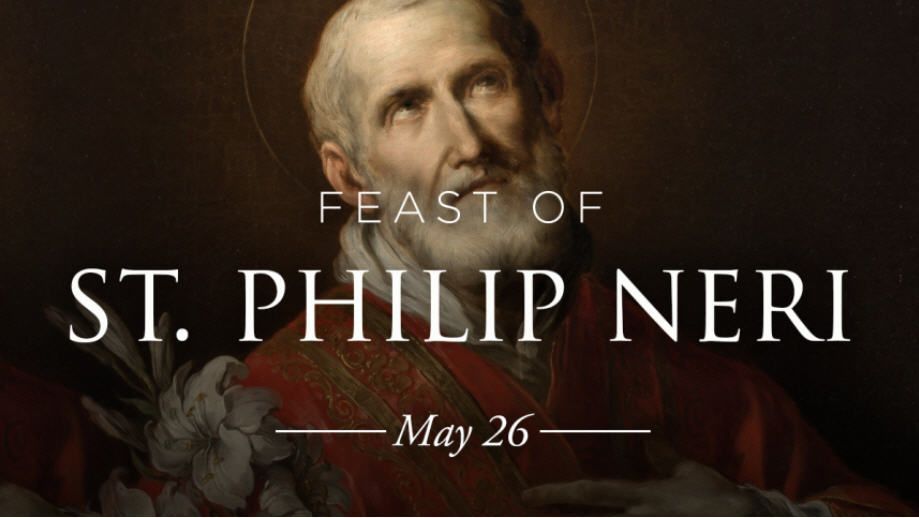
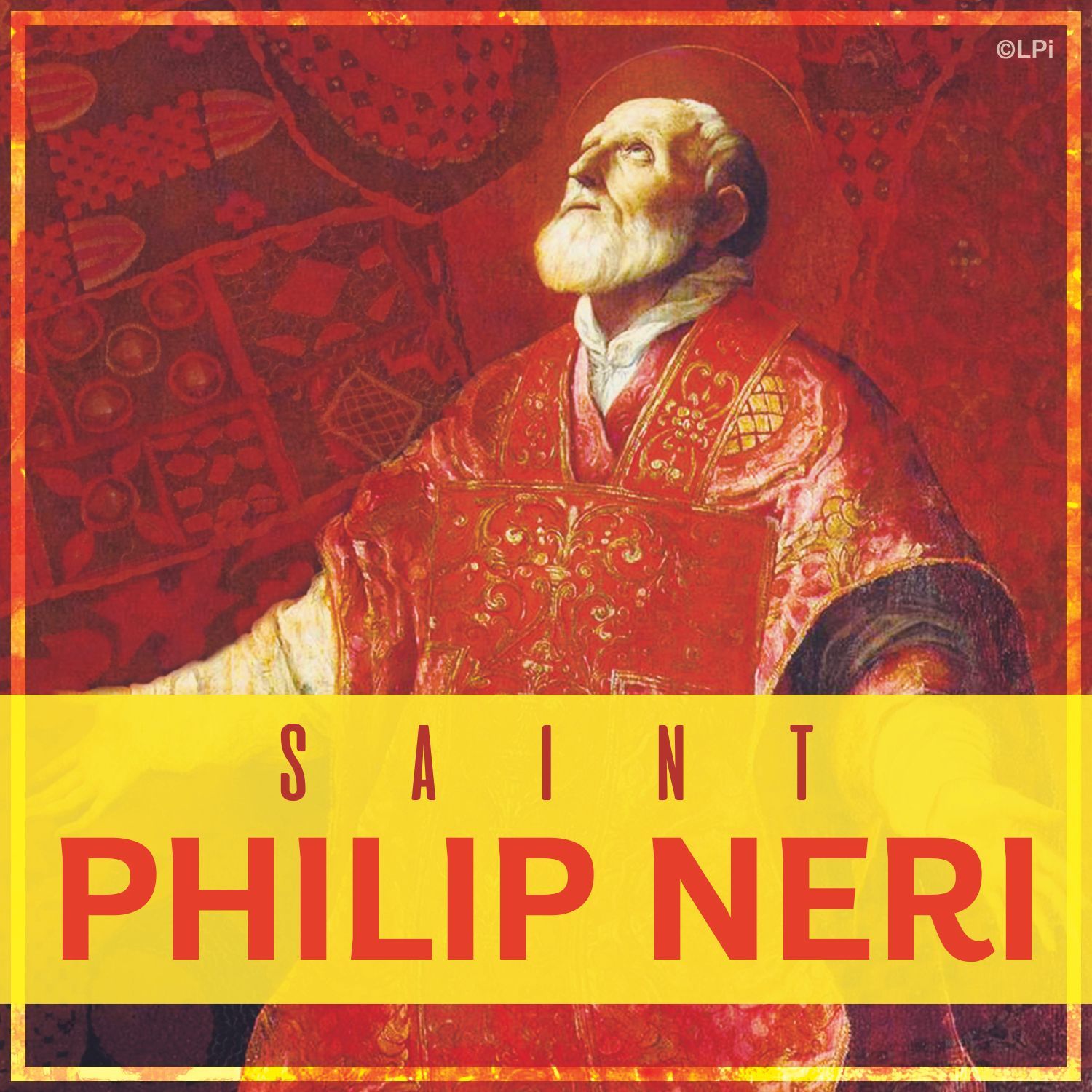
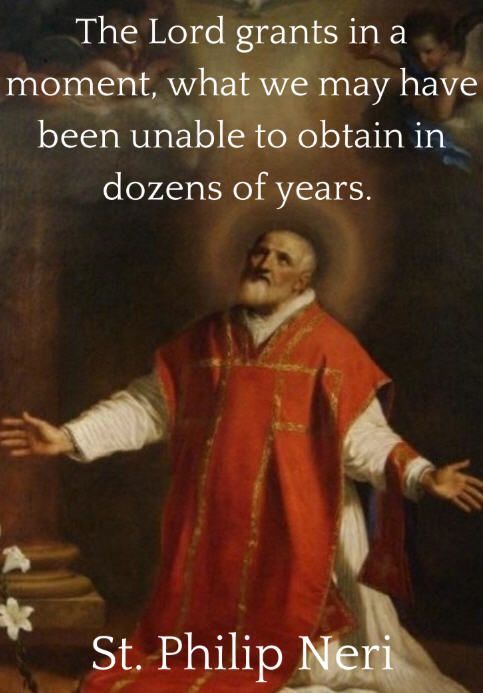
Feast of Saint Philip Neri - May 26
Quote:
Leafing through the biography of St Philip, in fact, one is surprised and fascinated by the cheerful and relaxed method he used to educate, supporting each person with fraternal generosity and patience. As is well known, the saint used to put his teaching into short and wise maxims: “Be good, if you can;” “Scruples and melancholy, stay away from my house;” “Be simple and humble;” “He who does not pray is a speechless animal;” and, bringing his hand to his forehead, “Holiness is three fingers deep.” Behind the cleverness of these and many other “sayings,” we are aware of the acute and realistic knowledge he had acquired of human nature and the dynamics of grace. He translated the experience of his long life and the wisdom of a heart inhabited by the Holy Spirit into these immediate, terse teachings. These aphorisms have now become a patrimony of wisdom as it were for Christian spirituality. ~Saint John Paul II
Reflection:
St. Philip Neri
Short Bio
St. Philip Neri was an Italian priest who served both the rich and poor of Rome with a jovial spirit. He founded The Congregation of the Oratory, a secular order which includes priests and brothers and does not bind them under religious vows, but instead by a bond of charity.
Biography
St. Philip Neri (1515 – 1595) was born in Italy and went to school as a child at the Dominican monastery in Florence. His family had hopes that he would work with his uncle, a wealthy merchant, and ultimately inherit his business and fortune but, shortly after beginning his work with him, Neri had a personal conversion. He decided to move to Rome to live a life of service.
For 13 years in Rome, Neri lived as a layperson, daily engaged in prayer and the apostolate. Even as a layperson he brought the Gospel of Jesus to everyone he met. He was eventually ordained to the priesthood and became known as a compassionate confessor, quick to disarm those around him with a joke or a kind word.
He is remembered as extremely approachable and jovial. He was kind, entertaining, and spontaneous in his approach which inspired many. He led prayer groups and excursions to visit other churches which often included music and picnics, and his council was sought by rich and poor alike. He was a strict vegetarian and was known to relocate animals and birds found inside the church back into the wild.
St. Philip Neri founded The Congregation of the Oratory. This secular order included priests and brothers and did not bind them under religious vows, but instead by a bond of charity. These men lived together in community and served those in need with happy hearts.
St. Philip Neri’s ability to increase his fellow religious leader’s faith coupled with his closeness with the common people in Rome cemented his reputation as the Apostle of Rome, called by God to evangelize the Holy City. His Congregation of the Oratory is still active today accomplishing the same mission. St. Philip Neri, pray for us!
Feast of Mary Mother of the Church - May 25
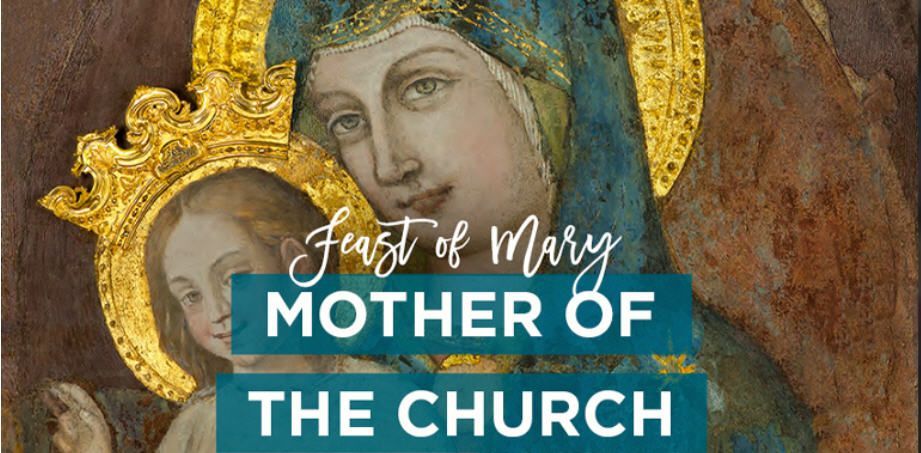
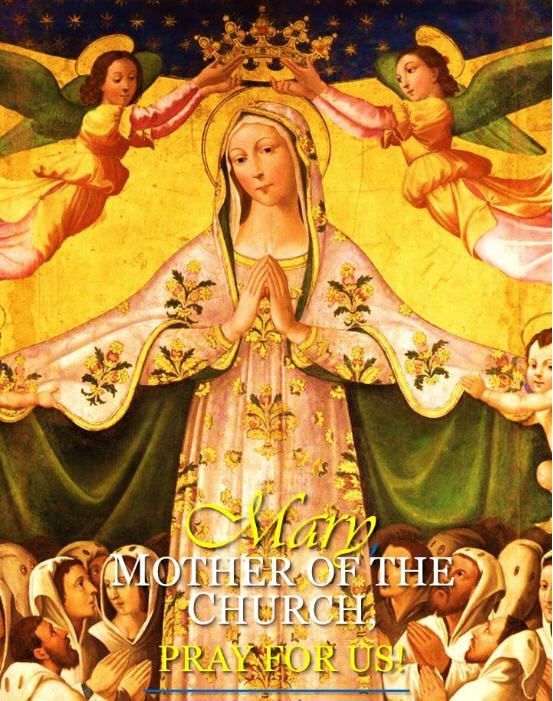
Mary, Mother of the Church
Taking into consideration the close ties by which Mary and the Church are bound together, to the glory of the Blessed Virgin and for our consolation, We declare Mary Most Holy to be Mother of the Church, that is, of the whole Christian people, faithful and Pastors alike, who invoke her as their most loving Mother; and We establish that by this sweetest of names the whole Christian people should henceforth give still greater honor to the Mother of God and offer her their supplications.
Venerable Brothers, this concerns a title by no means new to Christian piety; indeed the Christian faithful and the universal Church choose to invoke Mary principally by the name of Mother. In truth, this name belongs to the genuine nature of devotion to Mary, since it rests firmly on that very dignity with which Mary is endowed as the Mother of the Incarnate Word of God.
Just as the Divine Motherhood is the basis both for Mary's unique relationship with Christ and for her presence in the work of human salvation accomplished by Christ Jesus, so likewise, it is principally from the Divine Motherhood that the relationships which exist between Mary and the Church flow. Mary is indeed the Mother of Christ who, at the moment he assumed human nature in her virginal womb, joined to himself, as Head, his Mystical Body, which is the Church. Mary, therefore, as Mother of Christ, must also be regarded as Mother of all the faithful and Pastors alike, that is to say, of the Church.
Herein lies the reason why we, though unworthy and weak, yet in a spirit of trust and with ardent filial love, raise our eyes to her. She who once gave us Jesus, the fount of heavenly grace, cannot fail to offer her maternal help to the Church, especially at this time in which the Spouse of Christ strives with greater zeal to fulfil her salvific mission
These closest of bonds between our heavenly Mother and the human race urge Us, moreover, to foster and further strengthen this confidence. Even though she has been enriched with superabundant and wondrous gifts from God so as to be made worthy to be Mother of the Incarnate Word, nevertheless, Mary is very near to us. Like us, she is a child of Adam and so too our sister on account of our common human nature; she was preserved from the stain of original sin by reason of the future merits of Christ, but she added to these gifts received from on high the example of her own perfect faith and so merited the proclamation in the Gospel: "Blessed are you who have believed."
In this mortal life she embodied the perfect form of a disciple of Christ, she was the mirror of all virtues, and in her manner of life exemplified fully those beatitudes proclaimed by Christ Jesus. Consequently, the universal Church, while she lives out the many facets of her life and in her active zeal, draws from the Virgin Mother of God the peerless example of how to imitate Christ perfectly.
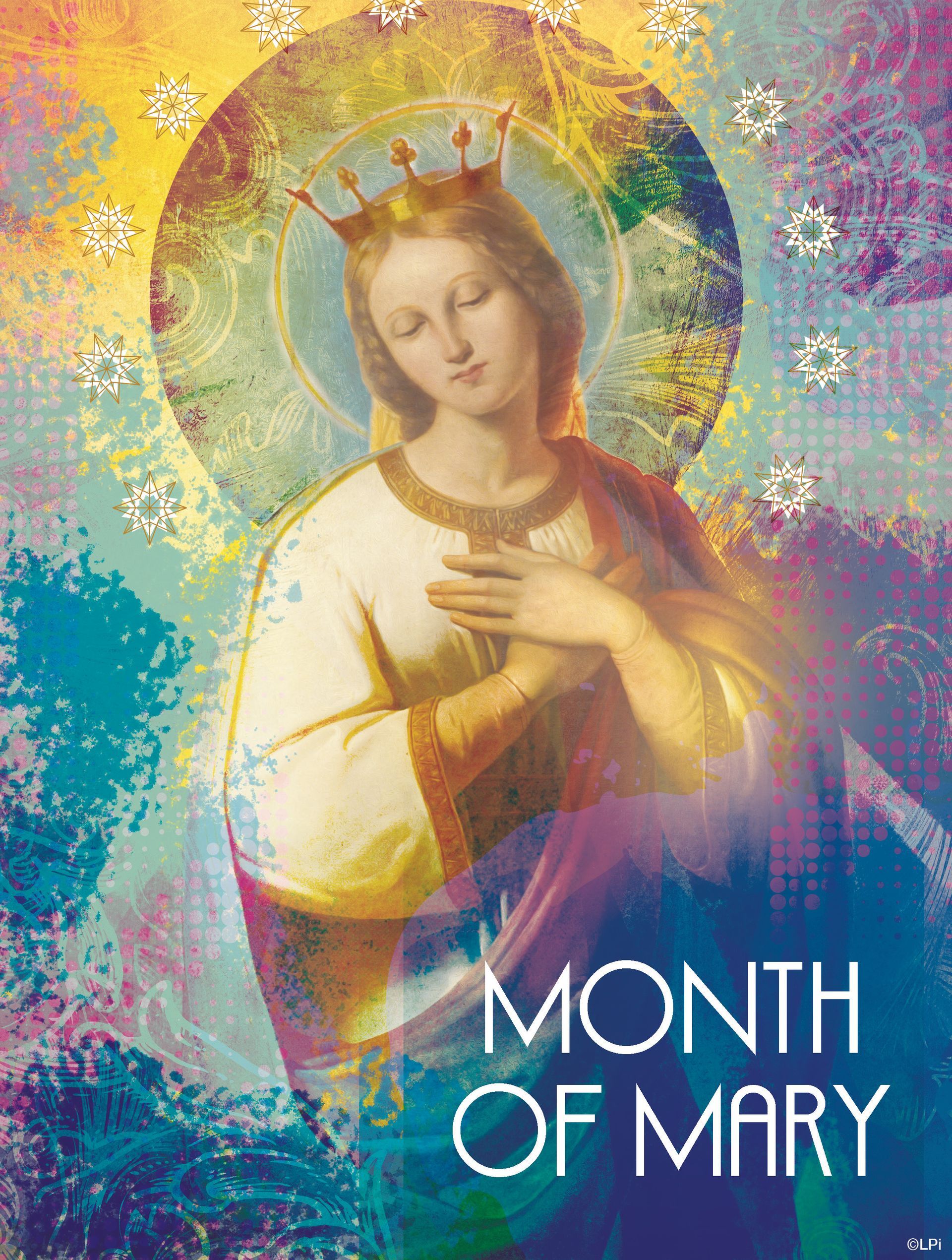
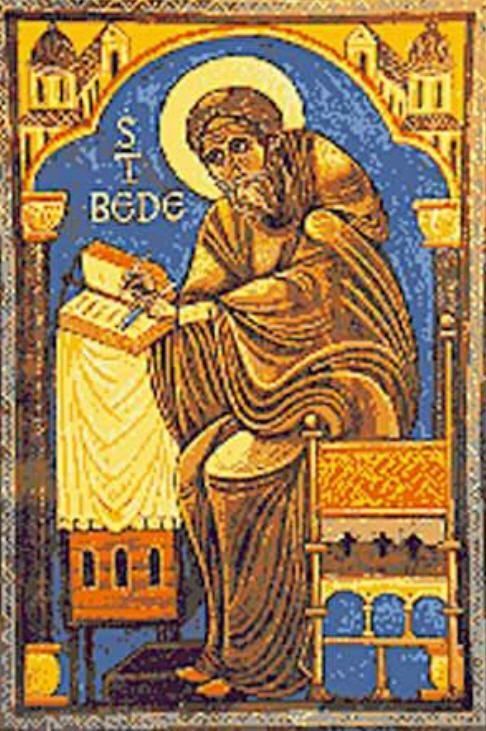
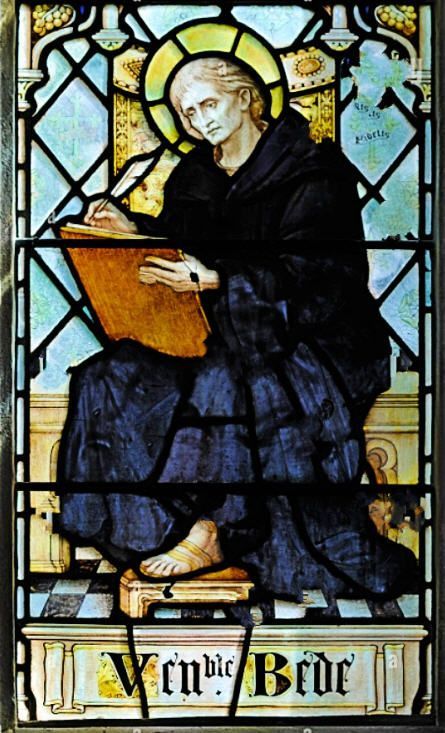
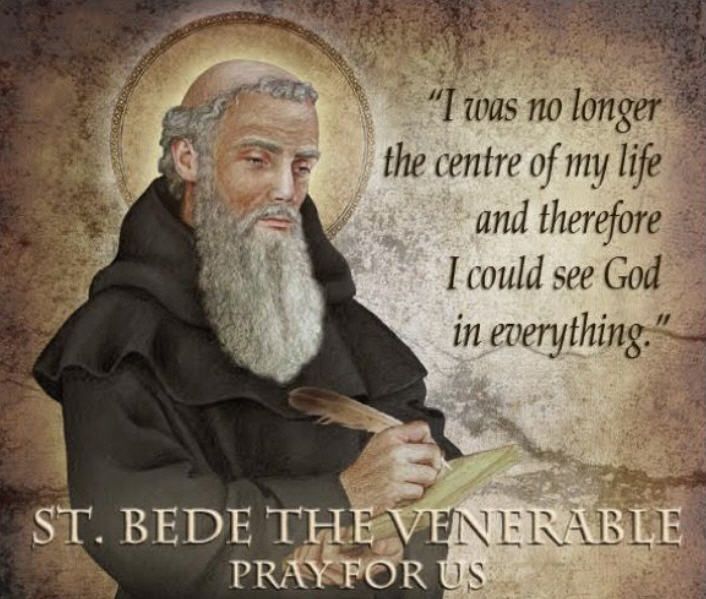
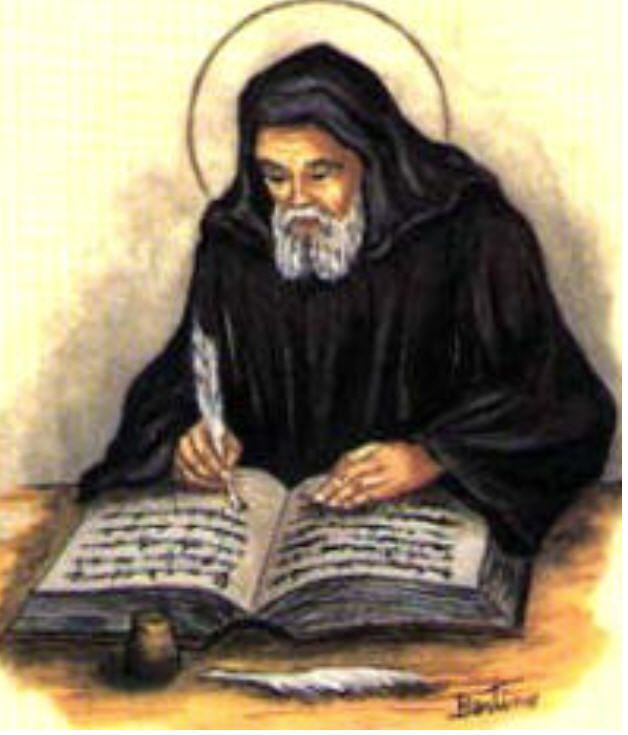
Saint Bede The Venerable - May 25
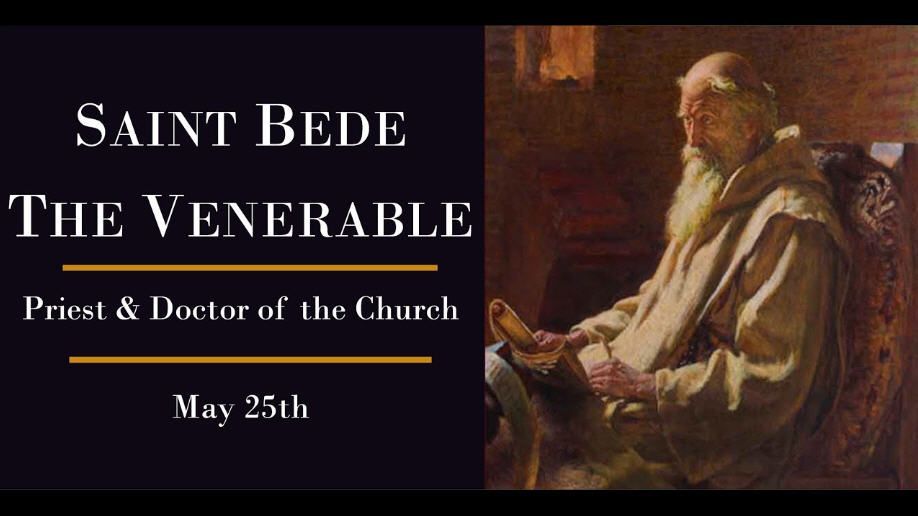
Quote:
To the most glorious King Ceolwulf. Bede, the servant of Christ and Priest. I formerly, at your request, most readily sent to you the Ecclesiastical History of the English Nation, which I had lately published, for you to read and judge; and I now send it again to be transcribed, and more fully studied at your leisure. And I rejoice greatly at the sincerity and zeal, with which you not only diligently give ear to hear the words of Holy Scripture, but also industriously take care to become acquainted with the actions and sayings of former men of renown, especially of our own nation… ~Preface of Bede’s Ecclesiastical History of England
Reflection:
In the fourth-century, many in Roman-controlled Britain were Catholic. However, after the fall of the Western Roman Empire in the fifth century and the removal of Roman troops from Britain to defend the homeland, Britain began to encounter threats from the Scottish and Irish. Angles and the Saxons from central Europe arrived to assist Britain but then conquered Britain themselves. By the sixth century, Britain had become known as Anglo-Saxon England and was divided into nine smaller kingdoms. The Anglo-Saxon people brought their pagan language and culture with them. Gradually, they eliminated Christianity from their new land, except from the southeast where many Britons had fled. To address this paganization, Pope Saint Gregory the Great sent Saint Augustine of Canterbury to evangelize the Anglo-Saxon kingdoms. Over the next century, all of the Anglo-Saxon kings converted and their subjects followed. It is into this historical context that today’s saint, Saint Bede, a holy monk, profound Scripture scholar, and brilliant historian, was born and ministered.
Bede was born near a Benedictine Monastery in Wearmouth and Jarrow, modern-day Tyne and Wear, in the northeastern part of the United Kingdom. As was common at that time, Bede was given to the care of the monks of Wearmouth at the age of seven with the expectation that he would remain with them and become a monk himself. A few years later, young Bede was sent across the river to the monks’ newly founded sister monastery at Jarrow. In 686, when Bede was about thirteen years old, a severe plague ravaged the monastery, leaving only Bede and Abbot Ceolfrid alive. One of the central duties of the monks was the chanting of the Divine Office, which the oblate Bede and the abbot continued faithfully.
Of his time in the monastery, Bede himself says, “I wholly applied myself to the study of Scripture; and amidst the observance of monastic rule, and the daily charge of singing in the church, I always took delight in learning, or teaching, or writing.” After more than a decade of study and prayer under Abbot Ceolfrid, Bede was ordained to the diaconate at the age of nineteen. Eleven years later, he was ordained to the priesthood at the age of thirty. Bede describes the thirty-two years of his priestly ministry as a monk this way: “From the time when I received priest’s orders, till the fifty-ninth year of my age, I have made it my business, for my own needs and those of my brethren, to compile out of the works of the venerable Fathers, the following brief notes on the Holy Scriptures, and also to make some additions after the manner of the meaning and interpretation given by them…”
Bede was a good Benedictine monk. According to the Benedictine Rule, Bede took a vow of stability, meaning he might never have left his monastery, except possibly for occasional short visits to nearby monasteries to assist with teaching. Within his monastic cell, Bede wrote more than forty books, twenty-five of them being commentaries on the Sacred Scriptures. He also wrote books on history, rhetoric, grammar, the calculation of time, biographies, theology, and poetry.
Bede’s most famous book was written when he was fifty-nine, The Ecclesiastical History of the English People. This book begins with a description of Britain and Ireland and their ancient inhabitants. From there, he traces the role of the Roman Empire in Britain, starting with Julius Caesar until Saint Alban, the first British martyr, and on through the early Christianization of the isle. After Britain was conquered by the Anglo-Saxons in the early fifth century, Bede describes the new evangelization initiated by Pope Saint Gregory the Great at the end of the sixth century and carried out by Saint Augustine of Canterbury. The bulk of his Ecclesiastical History then focuses upon the growth of the Church in England in the sixth and seventh centuries. Most importantly, this work ties the Anglo-Saxon people back to the Church in Rome. Though the Roman Empire no longer ruled Britain, the Catholic Church centered in Rome was the country’s true spiritual ruler. Bede especially saw Pope Saint Gregory the Great as the instrument of salvation for the Anglo-Saxons to whom he belonged.
Another of Bede’s great contributions to the Universal Church was his treatise “On the Reckoning of Time,” in which he taught the correct calculation of months and years. This work was significant because it enabled the Church in England to accept the correct day on which to celebrate Easter each year. This work also helped the world establish the current calendar that begins at the birth of Christ, solidifying the use of the term Anno Domini (A.D.), “in the year of our Lord.”
Bede’s commentaries on Scripture are deeply rooted in the writings of the Church Fathers but also broke new ground. Bede follows an allegorical and a moral approach by which he interprets the various passages of Scripture in the light of the death and Resurrection of Christ, emphasizing the Scripture’s deeper symbolic meaning, rather than just giving a literal interpretation.
After his death, Bede’s works became the foundation for much learning throughout Europe. He was described by his contemporaries as “the school-master of his age” and “the candle of the Church, lit by the Holy Spirit.” His works were copied over and over again, formed monks throughout Europe, and had an undeniable influence upon the whole history of the Church. By the ninth century, Bede was referred to as the “Venerable Bede’” in two Church councils. Saint Bede’s enduring influence has been felt so strongly that more than a millennia after his death, he was declared a Doctor of the Church by Pope Leo XIII in 1899, the only Englishman to receive such an honor.
During his lifetime, Bede had a profound influence upon the monks he taught. He lived, prayed, studied, taught, and wrote from the confines of his monastery. From that place of solitude and prayer, God used him to influence all of Europe and the entire world. God can do great things when we live our vocation well. Ponder the vocation God has given you. As you do, know that your vocation is your path to holiness. Live it well, and God will bring forth His transforming presence in you and through you in ways that you could never have imagined.
Prayer:
Saint Bede the Venerable, you were a holy monk who embraced his vocation with zeal and devotion. You prayed, studied, and wrote in accord with God’s holy will. By your hidden service to the Church, God influenced popes, saints, monks, and countless others in ways that we will only understand in Heaven. Please pray for me, that I will embrace my vocation with all my heart, so as to live my mission and discover my own path to holiness. Saint Bede the Venerable, pray for me. Jesus, I trust in You.
Saints Donatian and Rogatian - May 24
Quote:
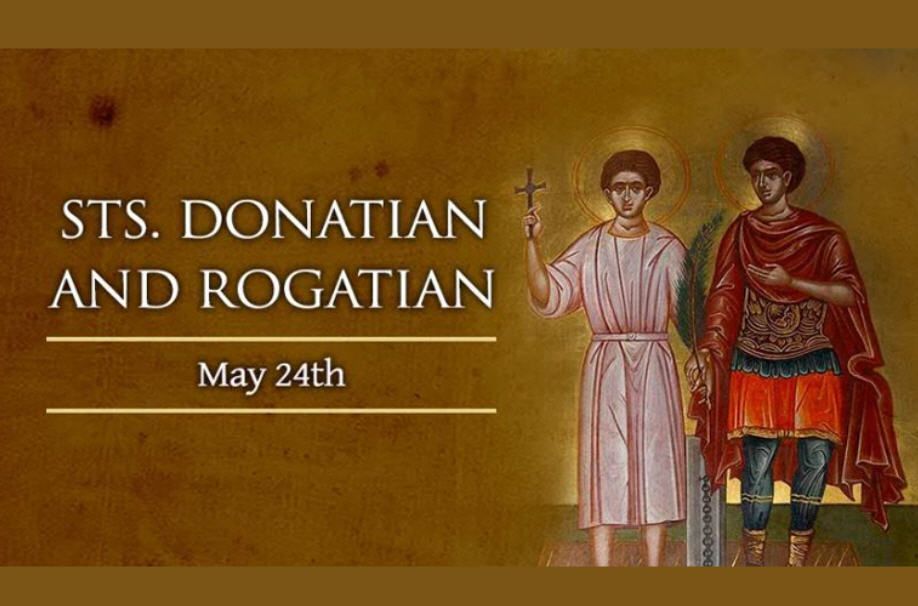
“We will not deny Him who gives life eternal, even if we lose this life today.” — Sts. Donatian and Rogatian
Reflection:
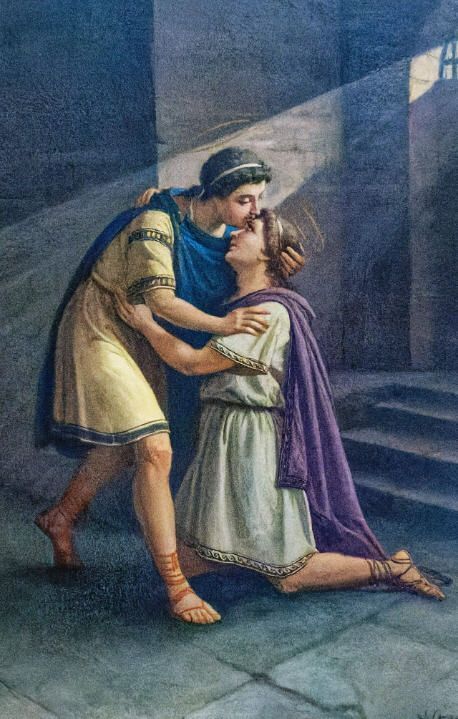
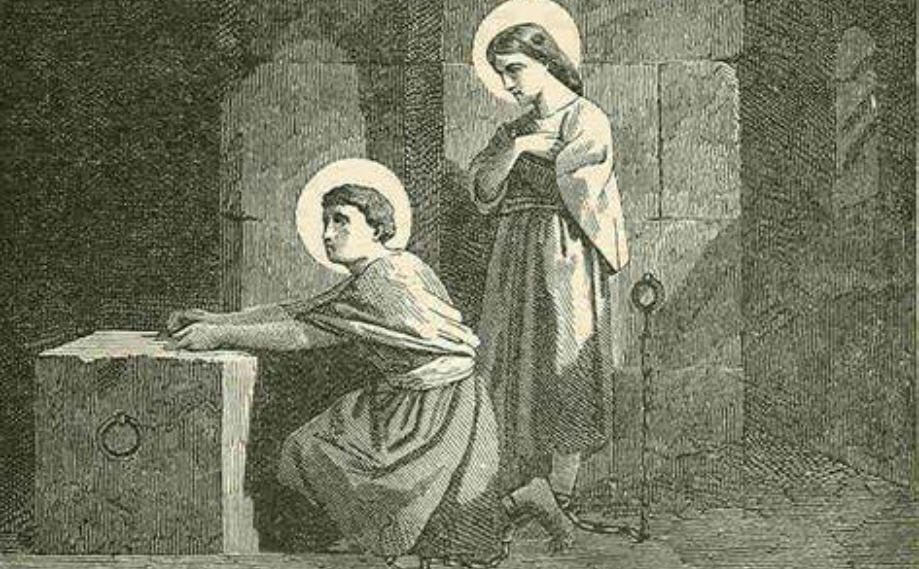
Saints Donatian and Rogatian were brothers who lived in the 3rd century in Nantes, France. Donatian, the younger, was a baptized Christian, while Rogatian, though not yet baptized, believed deeply in Christ and was preparing for the sacrament. During a fierce persecution of Christians under Roman rule, the two were arrested for refusing to renounce their faith. Despite threats, torture, and the offer of freedom if they recanted, both brothers held firm in their belief in Jesus. Rogatian, though not baptized with water due to their imprisonment, received what the Church calls a baptism of blood through his martyrdom. Together, they were executed by the sword, giving their lives as witnesses to Christ. Their courageous example has been honored for centuries, especially in the region of Nantes, where their memory continues to inspire perseverance and faithfulness.
Practical Lessons
- Support Your Loved Ones in Faith: Donatian and Rogatian strengthened each other during their trial. In modern life, support family and friends in their faith journey—pray together, encourage good choices, and stay loyal when faith is tested.
- Stand Firm in Your Beliefs: Even facing death, they did not deny Christ. In today’s world, practice standing up for your faith respectfully—whether it’s defending moral principles at work, being honest when it’s hard, or prioritizing Mass even when it’s inconvenient.
- Seize Every Opportunity for Grace: Rogatian longed for baptism but died a martyr before receiving it. His example reminds us not to delay seeking God’s grace—go to Confession regularly, make time for prayer, and act on inspirations to do good right away.
Prayer
Sts. Donatian and Rogatian, steadfast witnesses to Christ’s love, pray for us. Strengthen our hearts to remain faithful in trials, and help us to support and encourage one another in living out our Catholic faith. May we never delay in turning to God for grace and courage. Intercede for us, that we may persevere to the end and be found faithful before the throne of our Lord. Amen.
Saint John Baptist Rossi - May 23
Quote:
“Charity must never be idle; it must go in search of the needy.” — St. John Baptist Rossi
Reflection:
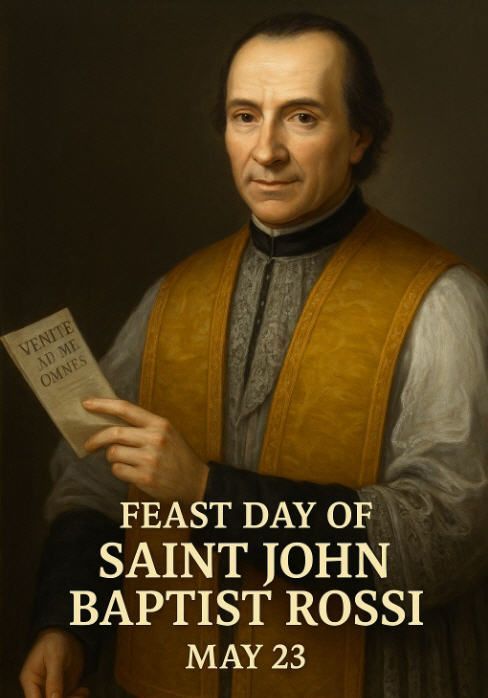
St. John Baptist Rossi was born in 1698 in the village of Voltaggio, Italy. From an early age, he showed a deep love for God and a special compassion for the poor and sick. Moving to Rome as a teenager to pursue his studies for the priesthood, he battled serious health issues throughout his life but remained determined to serve. After his ordination, he devoted himself to ministering to the sick, prisoners, and the homeless, often spending entire days in hospitals and prisons offering confession, counsel, and hope. He became known as “the apostle of the abandoned,” dedicating his life to those society had forgotten. Despite his fragile health, St. John Baptist Rossi’s kindness, humility, and tireless service made him a beloved figure in Rome. He died in 1764, worn out from a life of charity, but left a shining example of mercy in action.
Practical Lessons
- Use Your Struggles to Help Others: Despite his poor health, St. John Baptist Rossi didn’t let his limitations stop him from serving. Even when you’re tired, sick, or overwhelmed, small acts of kindness—like checking in on a neighbor or sending an encouraging message—can make a real difference.
- Prioritize the Forgotten: Rossi sought out the sick, imprisoned, and abandoned. In modern life, this can mean volunteering at shelters, visiting nursing homes, or simply reaching out to someone you know who feels isolated.
- Be Consistent in Compassion: Rossi didn’t serve just once a year; he made it his daily mission. Look for small, consistent ways to practice charity every day—holding the door, offering a seat, or listening patiently to someone who needs to talk.
Prayer
St. John Baptist Rossi, you who showed Christ’s mercy to the sick, the poor, and the forgotten, pray for us. Help us to recognize those around us who need love and attention. Teach us to serve with humility and joy, even when we feel weak or burdened. May we follow your example and reflect Christ’s compassion in our daily lives. Amen.
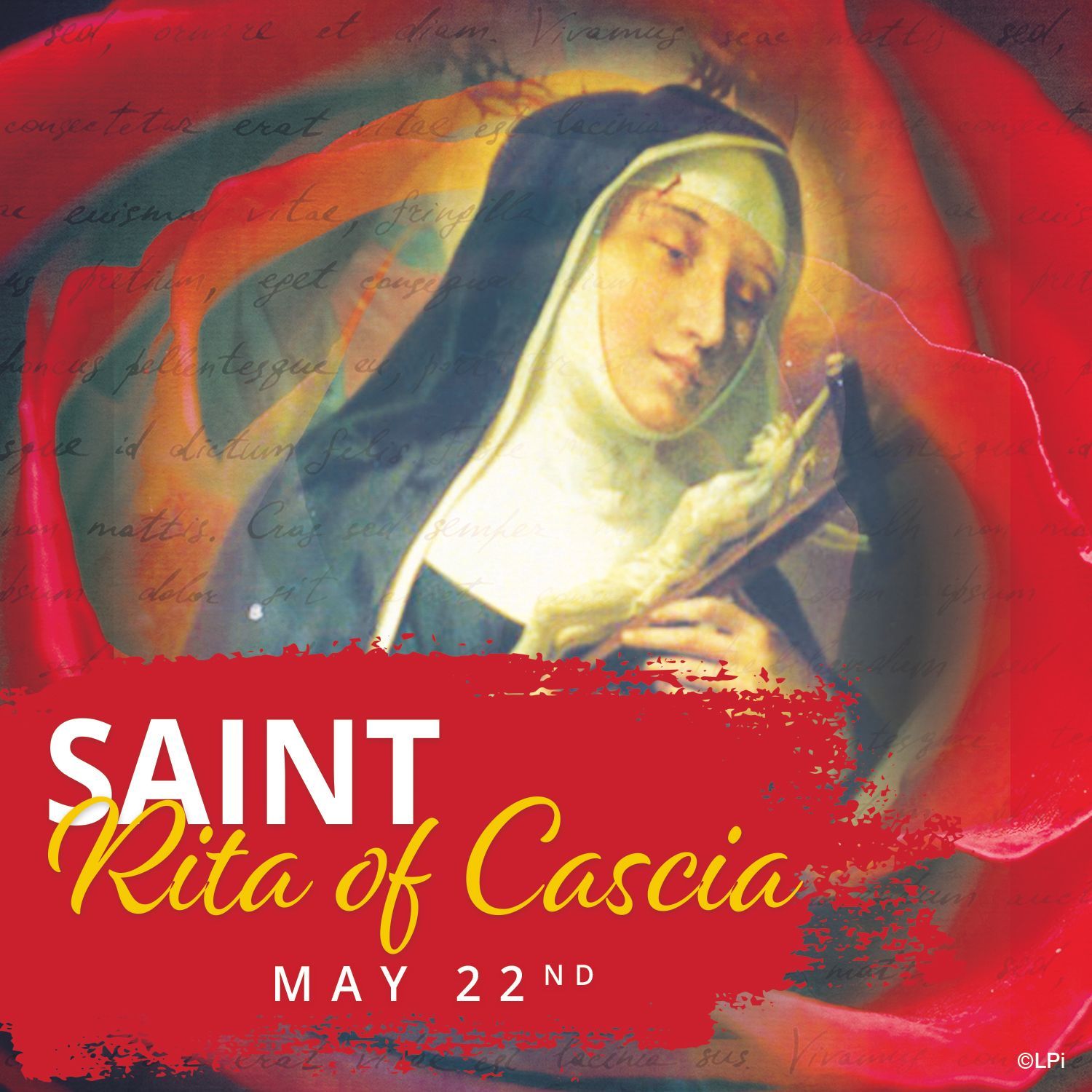
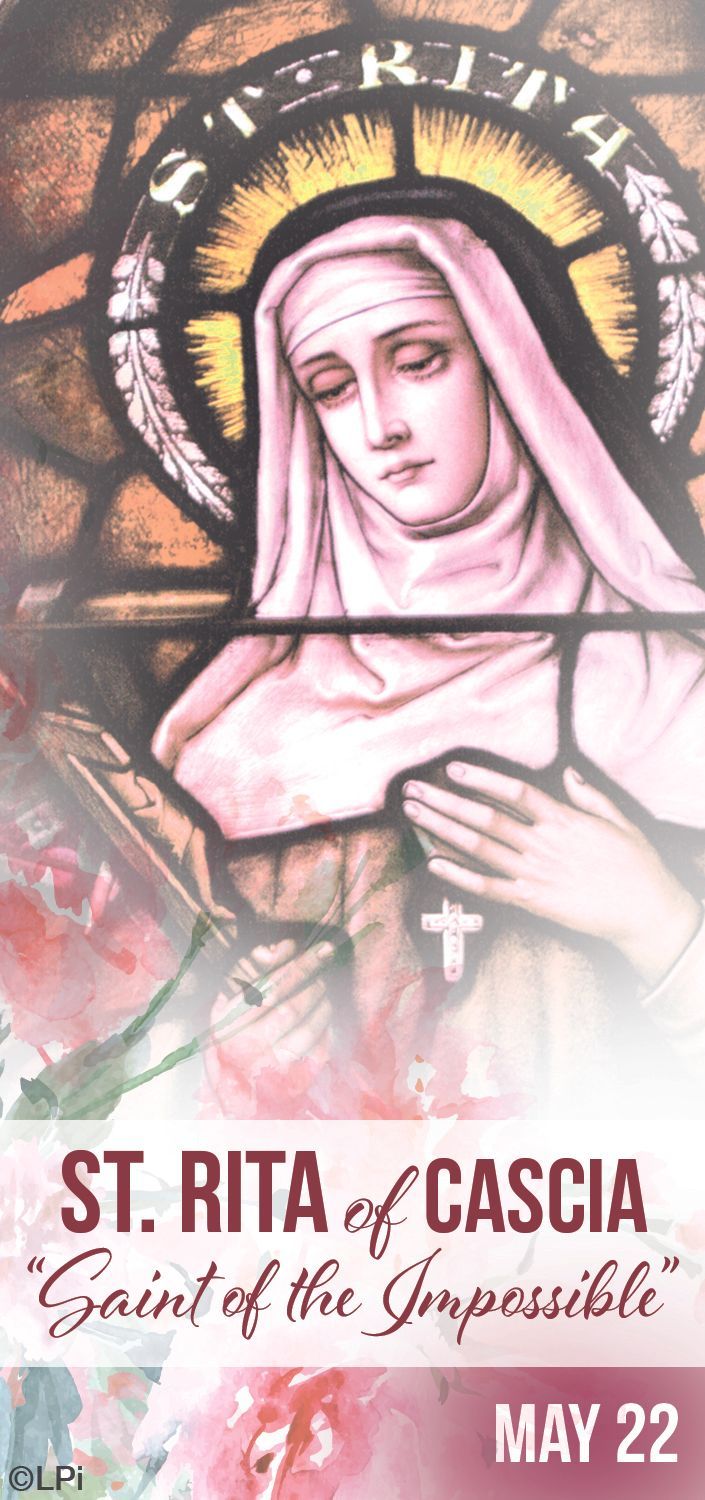
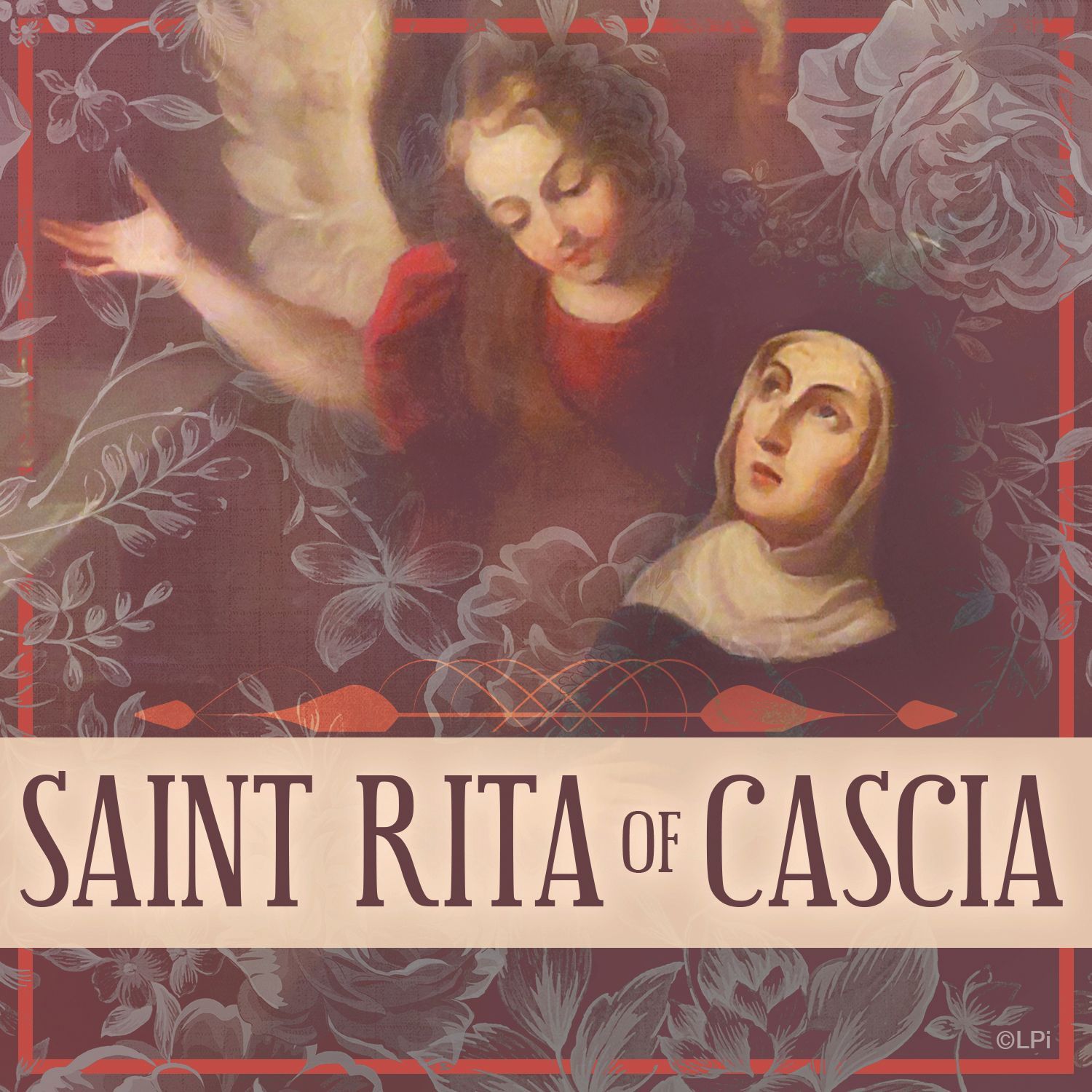
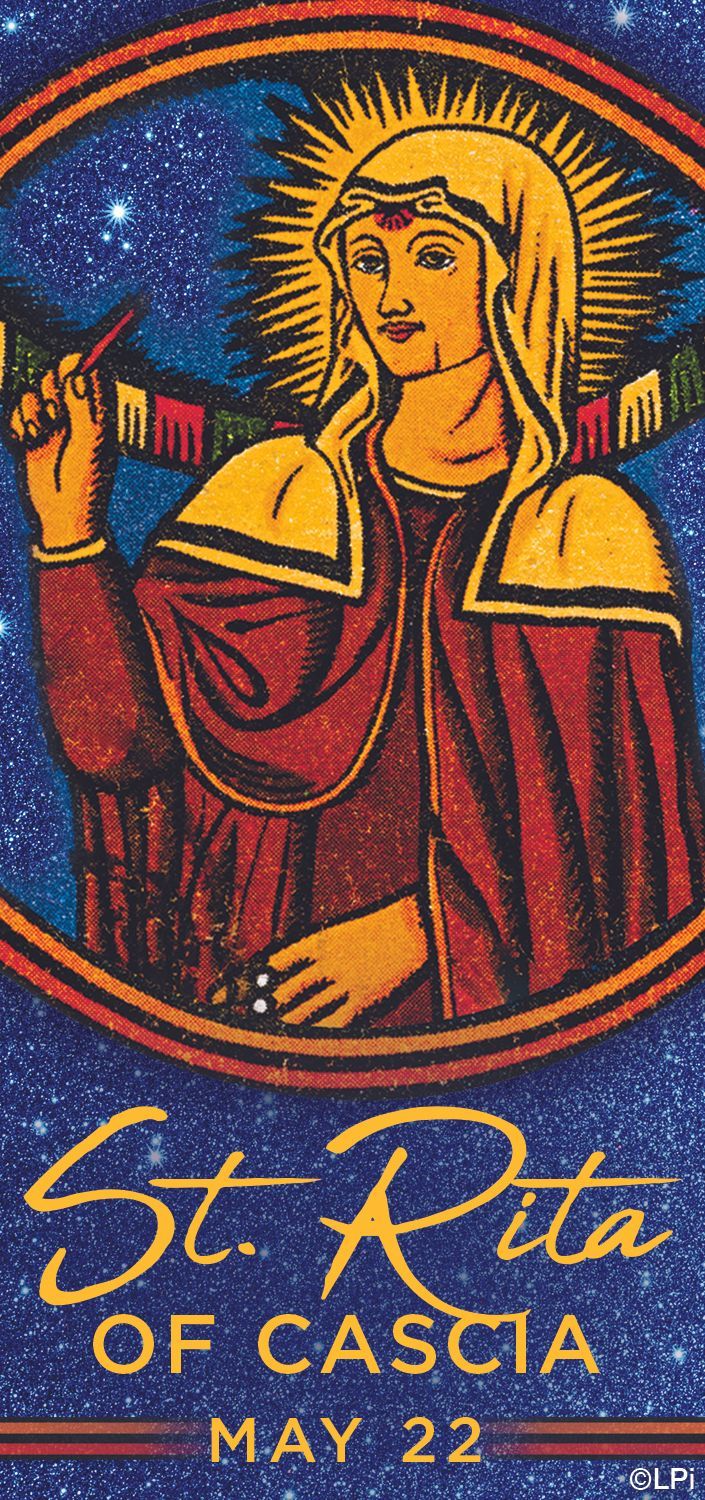
Saint Rita of Cascia - May 22
Quote:
Dear brothers and sisters, the worldwide devotion to Saint Rita is symbolized by the rose. It is to be hoped that the life of everyone devoted to her will be like the rose picked in the garden of Roccaporena the winter before the saint’s death. That is, let it be a life sustained by passionate love for the Lord Jesus; a life capable of responding to suffering and to thorns with forgiveness and the total gift of self, in order to spread everywhere the good odor of Christ (cf.
2 Cor 2:15) through a consistently lived proclamation of the Gospel. ~Address of Saint John Paul II
Reflection:
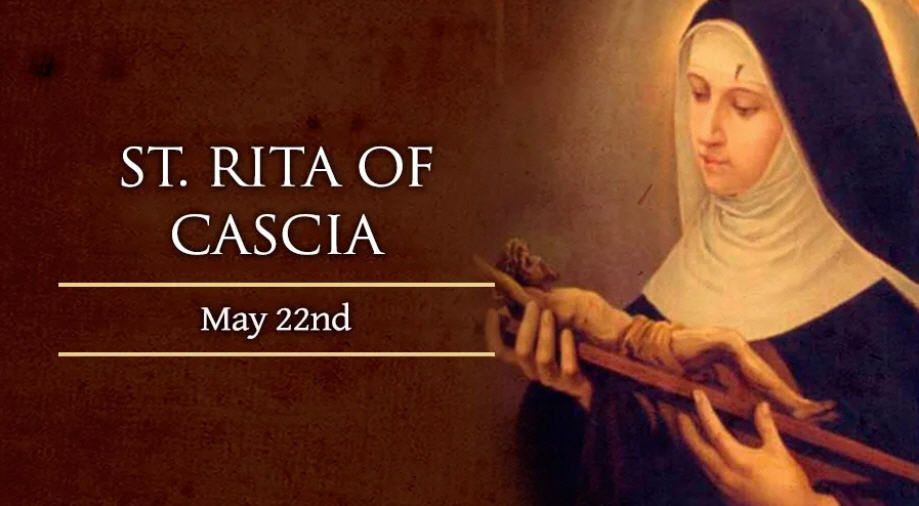
Margherita Lotti (Rita) was born in a small town near Cascia, Italy, to parents who were advanced in age. After years of childlessness, Rita’s parents saw the birth of their only child as an answer to prayer. At a young age, Rita’s faith was so strong that her parents set up a small oratory in their home in which she could pray. As a young girl, Rita begged her parents to permit her to enter a convent. Instead, according to the common practice of that time, her parents gave her away in marriage at the tender age of twelve.
Saint Rita is known as the patron saint of impossible causes, in part, because of the difficult marriage she endured with such love. Her husband was said to have been an angry and cruel man, who was mentally, emotionally, and even physically violent toward her. During their eighteen years of marriage, it is said that her prayers, coupled with the witness of her many virtues, softened his heart and he turned to Christ, at least enough to attain the hope of Heaven. Rita gave birth to two sons, perhaps twins, and raised them within the Catholic faith as a devout mother.
At that time, it was not uncommon for one family in a town to have an ongoing feud with another family. Such was the case with Rita’s husband, who was of the Mancini family. The Mancinis did not get along with the neighboring Chiqui family. The end to this feud was among Rita’s daily prayers. Her prayers were answered, at least on the side of her husband, Paolo. By the eighteenth year of their marriage, Paolo had begun to turn from his anger and to find more peace in God. He resolved to end the feud with the Chiqui family and attempted to restore peace. Rather than accept his overture, a member of the Chiqui family tricked Paolo and stabbed him to death.
At Paolo’s funeral, Rita publicly forgave her husband’s murderer and offered peace. However, Rita’s brother-in-law, Bernardo, was of a different mind. He began to stir up hatred in the hearts of Rita’s two sons to convince them to avenge their father’s death. The boys agreed, and Rita, filled with holy sorrow, tried to convince them to change their plans. When they wouldn’t, Rita turned to prayer. She prayed that God would preserve her sons from the mortal sin of murder, even if it meant taking their lives before they could carry out their plan. Rita’s prayers were answered. Both of her sons died of dysentery within a year, before they could act out their revenge.
Widowed and childless, Rita turned to her childhood desire of entering the convent. She was refused admission because she was previously married and due to the scandal of her husband’s violent death. In response, Rita sought to bring about a reconciliation between her family and the Chiqui family once and for all. She prayed through the intercession of her patrons, Saints John the Baptist, Augustine, and Nicholas of Tolentino. She also sought the prayers of Saint Mary Magdalene, the patroness of the convent she wanted to enter. Rita’s prayers were answered, reconciliation took place, and God opened the door for her to enter the convent of Saint Mary Magdalene in Cascia to live the Augustinian rule of life. One pious legend states that while she prayed and levitated, her three patron saints brought her inside the locked doors of the convent. When the sisters saw this, they concluded that it must be God’s will that she enter.
Not much is known about Rita’s forty years as a religious sister. She is said to have lived a profound life of prayer, often praying throughout the night. She joyfully embraced severe penances, ate only once a day, relying primarily on the food of the Most Holy Eucharist as her daily sustenance. Many who came to the convent to ask for her prayers attested to the power of her intercession. Some even attributed miracles to her prayers.
At the age of sixty, while deep in prayer before a crucifix, Sister Rita received the miraculous gift of the stigmata in the form of a wound on her head, inflicted by one of the thorns that pierced Jesus’ brow. This is believed to have taken place shortly after Rita heard a sermon on the Crown of Thorns by Saint James della Marca, a Franciscan friar who was known for his powerful preaching and devotion to the Holy Name of Jesus. Sister Rita’s wound was so painful and unsightly that she is said to have remained in seclusion in her convent, even from her fellow sisters, for the last decade of her life. The one exception was a pilgrimage to Rome taken by all the sisters. Just prior to that trip, her wound healed, but it reappeared upon her return to the convent.
Since Rita’s death from tuberculosis at the age of seventy, many miracles have been attributed to her intercession. When her body was exhumed, it was found to be incorrupt and is on display in a glass reliquary at the Basilica of Saint Rita in Cascia. It is said that at times her body levitates and that sweet odors permeate the air.
Saint Rita of Cascia suffered greatly throughout her life. Her desire of becoming a nun was initially thwarted when she was given in marriage at the age of twelve to a violent and cruel man. She endured her marriage with love and suffered the brutal murder of her husband and the death of both her sons. She joyfully inflicted severe penances upon herself as a religious sister, and God joyfully inflicted upon her the suffering of His Crown of Thorns.
Through it all, Saint Rita united herself more fully to the sufferings of Christ and won many graces for her soul and the souls of many others. Ponder your own sufferings, especially if you can relate to the ones that Saint Rita endured. As you do, strive to imitate this saint by uniting those sufferings to the sufferings of Christ for the salvation of your soul and the souls of those most in need.
Prayer: Saint Rita, you endured much suffering throughout your life, but you embraced that suffering with love and united it to the sufferings of your Savior. Please pray for me, that I will be strengthened to imitate your profound love, will accept all sufferings with love, and seek to bring about peace in my heart and in the hearts of those around me. Saint Rita of Cascia, pray for me. Jesus, I trust in You.
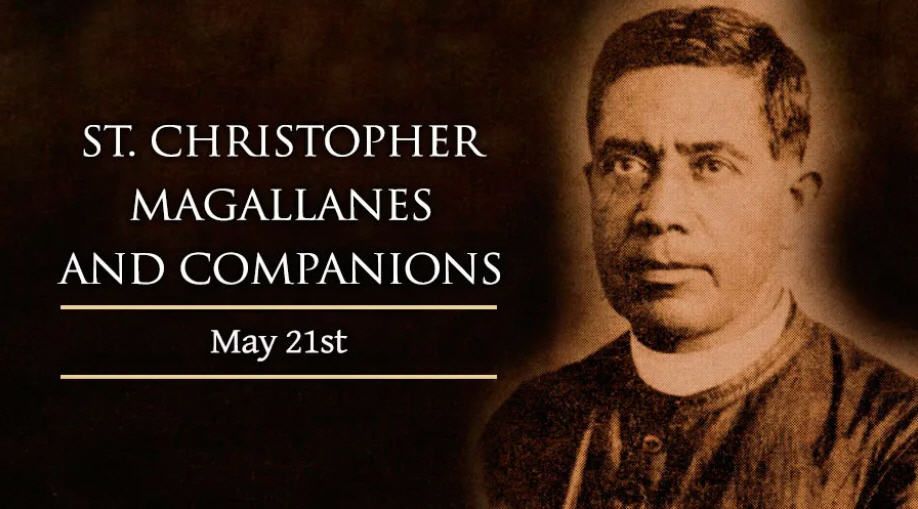
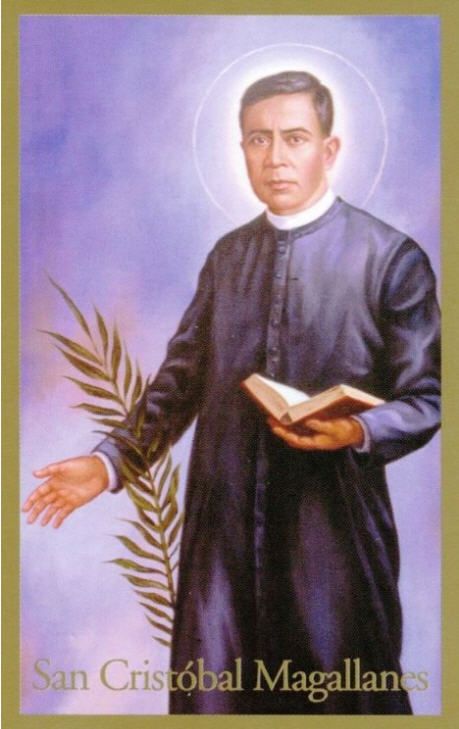
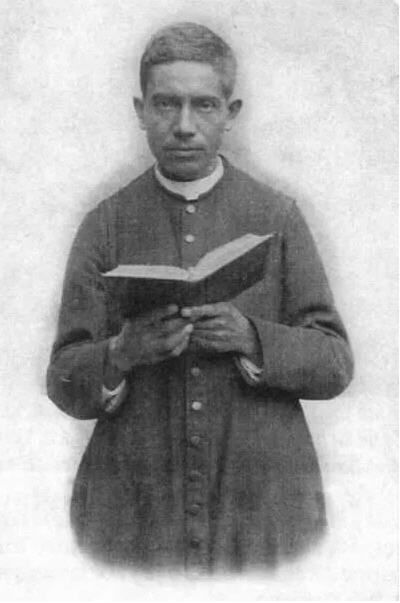
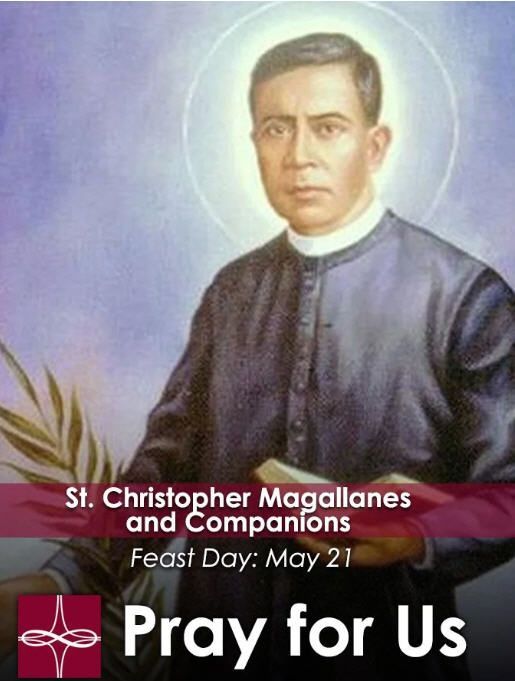
Saint Christopher Magallanes - May 21
Quote:
“The Church … had peace and was built up; and walking in the fear of the Lord and in the comfort of the Holy Spirit, it was multiplied” (Acts 9: 31). We can well apply this passage from the Acts of the Apostles to the situation which Cristóbal Magallanes and his 24 companion martyrs had to endure in the first 30 years of the 20th century. Most of them belonged to the secular clergy and three were laymen seriously committed to helping priests. They did not stop courageously exercising their ministry when religious persecution intensified in the beloved land of Mexico, unleashing hatred of the Catholic religion. They all freely and calmly accepted martyrdom as a witness to their faith, explicitly forgiving their persecutors. ~Homily of Saint John Paul II
Reflection:
“¡Viva Cristo Rey! ¡Viva la Virgen de Guadalupe!” Long live Christ the King! Long live the Virgin of Guadalupe! This was the cry of the Christeros, mostly peasant Catholics who opposed the fierce political and anti-Catholic oppression inflicted by the Mexican government on its citizens in the early twentieth century.
The Catholic faith arrived in modern-day Mexico in the early 1500’s with Spanish Franciscians. In 1531, the apparition of Our Lady in Guadalupe greatly aided efforts to share the Gospel. Devotion to the Mother of God and conversions to the Catholic faith grew far and wide. By the turn of the nineteenth century, the Catholic Church was a powerful force in the Spanish colony of Mexico. As a result, some ruling parties resented the Church and sought to eradicate Her influence. Anti-Catholic sentiment especially grew once Mexico declared its independence from Spain in 1810. In 1857, the new Mexican constitution sought to limit the role of the Catholic Church in Mexico. That law resulted in the confiscation of Church property and the beginning of the separation of the Catholic Church from the state. After an initial persecution, there was relative peace until around 1910. In 1917, another constitution was enacted, and in 1926, President Plutarco Elías Calles began to enforce anti-Catholic laws with vigor, especially against Catholic priests. He eliminated the Catholic education of youth, expelled all foreign priests, banned celibacy and religious vows, and confiscated all remaining Church property. The devastation was immense. At the beginning of the century, there were an estimated 4,500 priests serving in Mexico, most of them foreign-born. By 1934, only 334 state-licensed native priests remained for approximately fifteen million Catholics.
In November 1926, Pope Pius XI intervened and issued an encyclical, Iniquis Afflictisque, in which he addressed this new Mexican law: “The most recent law which has been promulgated as merely an interpretation of the Constitution is as a matter of fact much worse than the original law…” In 1934, he followed up with another encyclical, Acerba Animi, in which he said of the Mexican government: “The clearest manifestation of the will to destroy the Catholic Church itself is, however, the explicit declaration, published in some States, that the civil Authority, in granting the license for priestly ministry, recognizes no Hierarchy; on the contrary, it positively excludes from the possibility of exercising the sacred ministry all of hierarchic rank—namely, all Bishops and even those who have held the office of Apostolic Delegates.”
The twenty-five saints we honor today all died at the hands of the government during this period of anti-Catholic turmoil. One died in 1915, and the remaining twenty-four died between 1926–1928. Three of them were laymen; the rest were diocesan priests. Two were hanged in the public square, and the rest were shot to death, most by a firing squad without a trial. Though many of them were falsely accused of supporting armed conflict against the government, the only crime of each priest was secretly ministering to the needs of the people. The three laymen were members of a Catholic action group that worked to oppose the government’s oppression of the Church and encouraged fellow Catholics to remain strong in their faith.
Among these twenty-five martyrs, today’s memorial specifically mentions one by name: Saint Christopher Magallanes. Cristobal Magallanes Jara was born in Totatiche, Jalisco, Mexico to faith-filled parents who were farmers. As a child, Christopher helped work the land and tend the sheep. In 1888, at the age of nineteen, Christopher entered seminary and was ordained a priest eleven years later. He began his priestly ministry as a teacher in Guadalajara but shortly afterwards was appointed parish priest in his hometown where he served for more than twenty years.
As a priest, Father Magallanes not only served the spiritual needs of his parishioners, he also assisted with their intellectual and material needs by founding schools and opening a carpentry shop to employ the locals and build infrastructure for the town. He also evangelized the indigenous people who had not yet heard the Gospel. In 1915, after the government closed the seminary in Guadalajara, Father Christopher opened a secret seminary in his own home, with the support of the bishop. Shortly afterwards he had seventeen seminarians.
Though Father Magallanes did not support armed rebellion, he was accused of assisting the Christeros and was arrested on May 21, 1927 on his way to celebrate Mass at a farm for his clandestine parishioners. Four days later, without receiving a trial, he was shot to death. His last words are recorded as, “I am innocent and die innocent. I absolve with all my heart those who seek my death and ask God that my blood bring peace to a divided Mexico.”
One of the priests assigned to assist Father Magallanes in his secret seminary was Father Agustín Caloca Cortés. Father Cortés was arrested on the same day as Father Magallanes and was imprisoned with him. By God’s grace, the two were able to absolve each other of their sins in preparation for their deaths. Since Father Cortés was only twenty-nine years old, the officers offered to set him free. He refused unless they also set Father Magallanes free, which the guards refused to do. Father Cortés’ last words before being shot were, “For God we lived and for Him we die.”
As we honor these twenty-five heroic martyrs, we are reminded that the Gospel is more important than life itself. It is better to die than to compromise the faith. Though few today face the threat of physical martyrdom, the secular world attacks the faith in many other ways, requiring us to stand as faithful witnesses to Christ. Ponder any ways that you give in to fear in the face of persecution, and pray that the martyrs we honor today will win for you the courage you need to remain faithful until the end.
Prayer:
Saint Christopher Magallanes and Companions, you chose to die rather than give in to atheistic and anti-Catholic oppression. You valued the Catholic faith over your own lives. Please pray for me, that I will have the courage you each had so that I can give witness to my love of God, even to the shedding of my blood. Saint Christopher Magallanes and Companions, pray for me. Jesus, I trust in You.
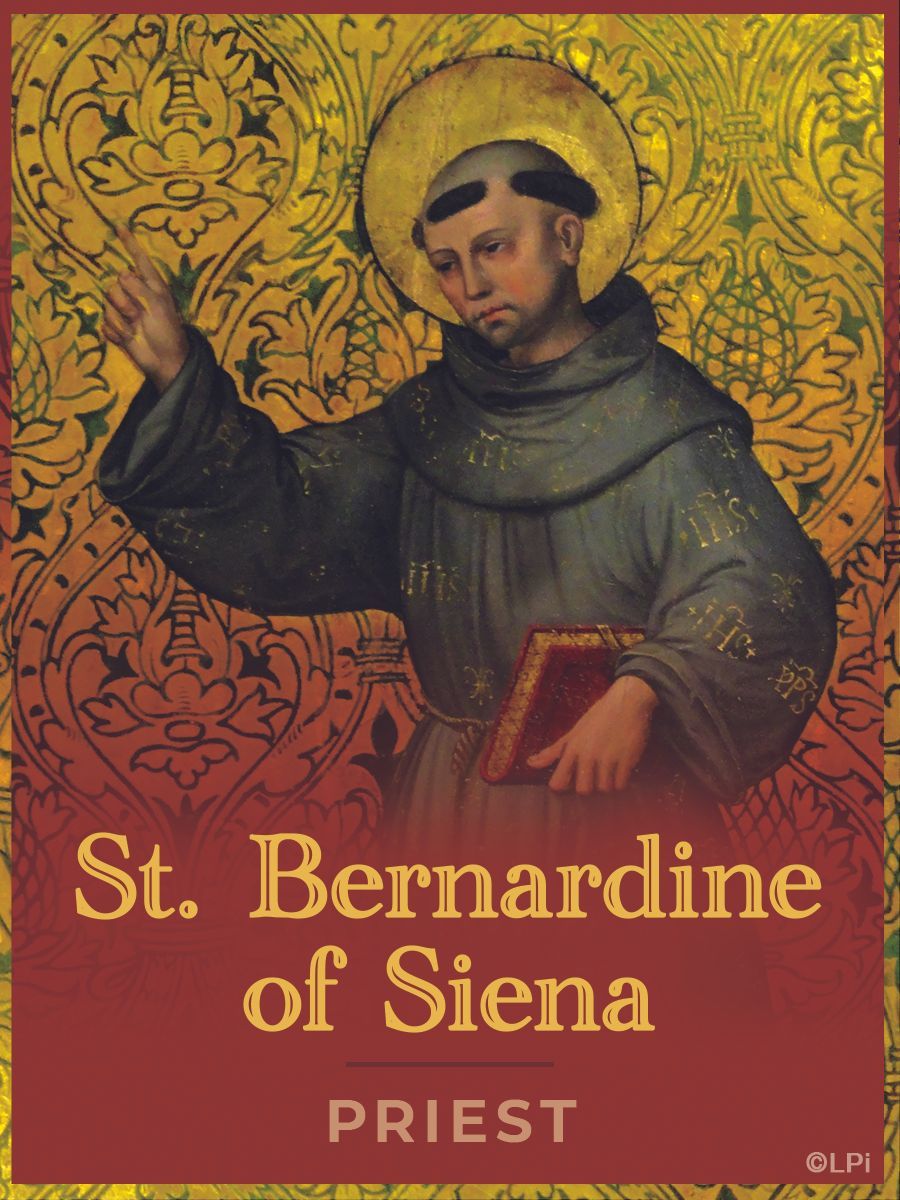
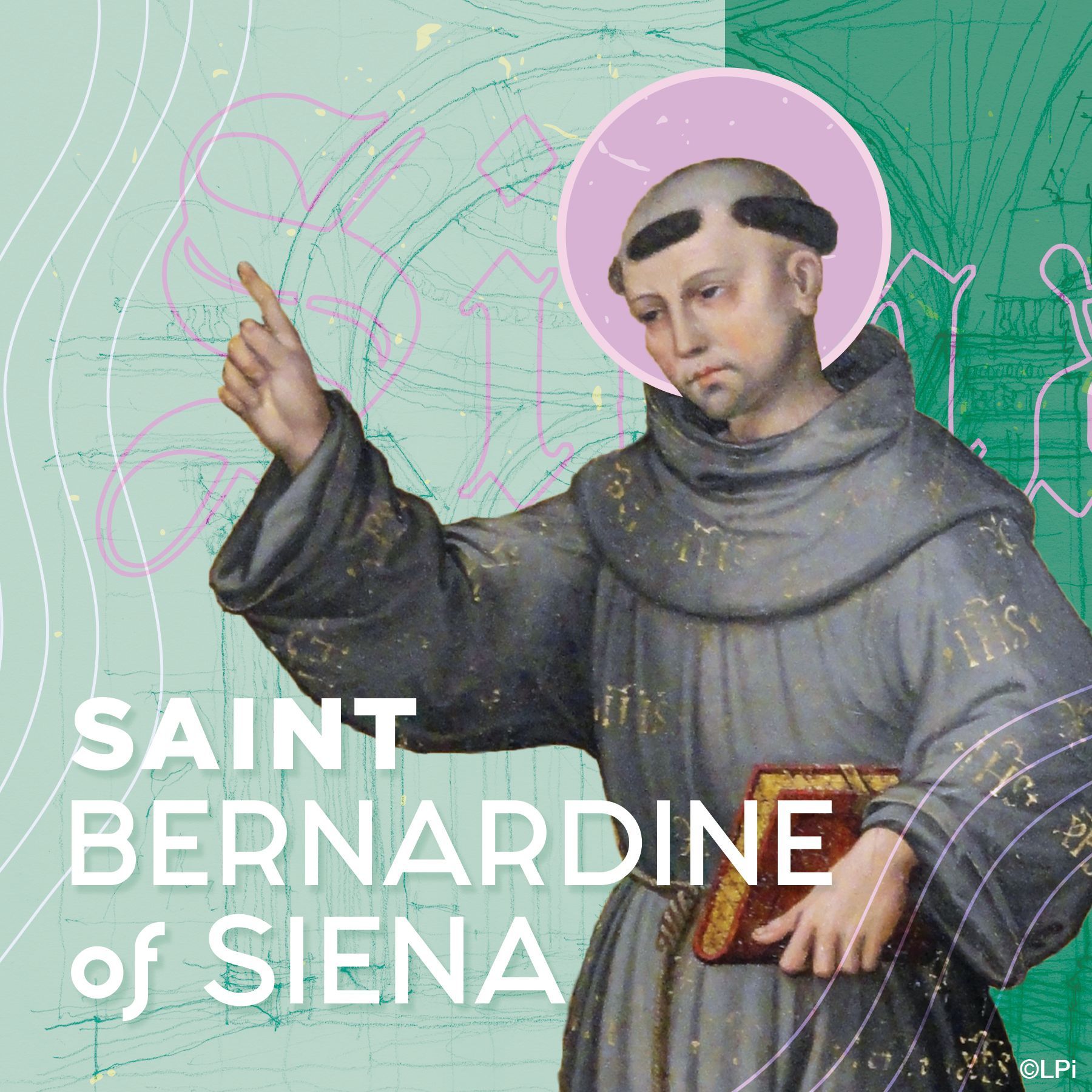
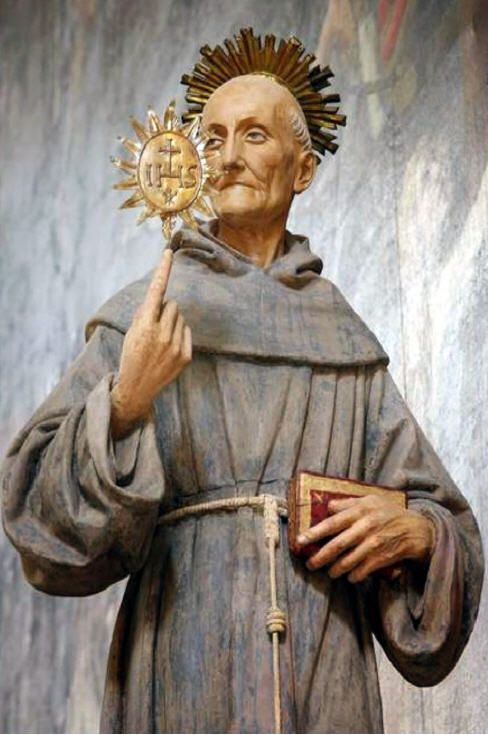
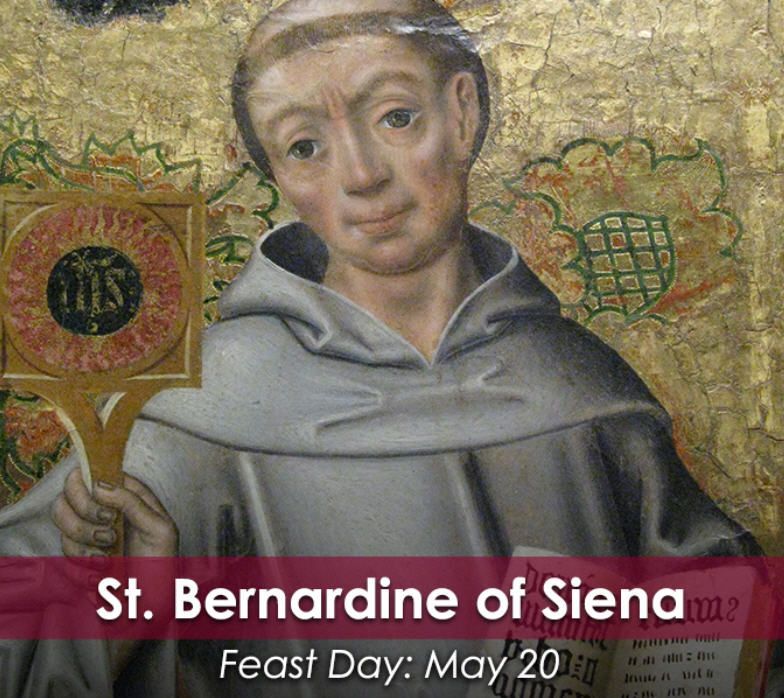
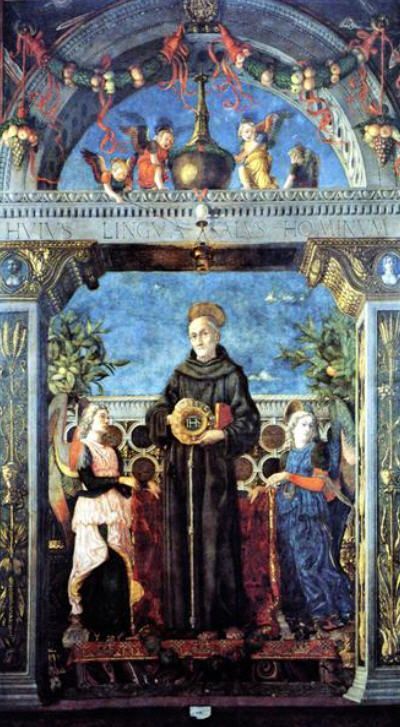
Saint Bernardine - May 20
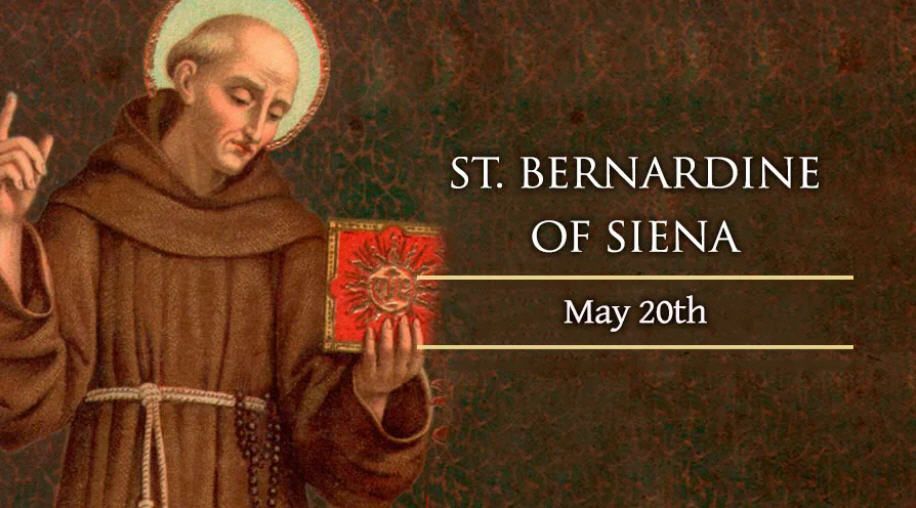
Quote:
The name of Jesus is the splendor of preachers, because it causes His Word to be proclaimed and heard with glowing splendor. Whence, do you think, came the great, sudden, and shining light of faith that filled the world, if not from the preaching of Jesus? Was it not by the light and sweetness of this Name that God called us into His wonderful light? It is to us, on whom the light has shone and who in that light see light, that the apostle addresses these apt words: “Once you were darkness, but now you are light in the Lord; walk as children of the light.”…Hence this Name must be proclaimed so that it may shine; it must not be hidden. ~Sermon of Saint Bernardine
Reflection:
Bernardine was born into a noble family in the town of Massa Marittima, in the Province of Siena, Italy, where his father was governor. Both of Bernardine’s parents died before he reached the age of seven, leaving him to the care of his aunt. His aunt’s devout Catholic faith greatly influenced Bernardine. He especially grew in love for the poor and often preferred to give his food away rather than to refuse a beggar.
When Bernardine was eleven, his uncles sent him to school in Siena to study civil and canon law. During those years of study, he continued in his devotion, fasted every Saturday in honor of the Blessed Virgin Mary, and was careful to engage only in dignified and reverent conversations. After completing his schooling at the age of seventeen, Bernardine remained in Siena and joined the Confraternity of Our Lady, whose members assisted at a local hospital that cared for the sick, orphans, the poor, and pilgrims. In the year 1400, when Bernardine was twenty, a plague hit Siena and countless people died, including many of the hospital workers. Courageously, Bernardine gathered twelve young men, just as Jesus gathered twelve apostles. Together, they took over the administration of the hospital and tirelessly devoted themselves to the care of the sick. After four months of hard work, Bernardine fell ill, but not from the plague. He remained bedridden for four months and used that time to deepen his prayer. When he recovered, he spent fourteen months caring for an aunt, who was blind and bedridden, until her death.
Around the age of twenty-two, Bernardine decided to enter into a time of solitude and prayer to discern God’s will for his life. His discernment led him to join the Franciscan Friars of the Strict Observance. Though their life of prayer and penance appeared strict to the outside world, to Bernardine it was the bare minimum. He regularly exceeded the normal disciplines of the order, joyfully imposing upon himself more severe penances and prayer than was expected of him. After completing his novitiate and his first profession of vows, the twenty-four-year-old Bernardine was ordained a priest on his birthday, the Feast of the Nativity of the Blessed Virgin Mary.
Father Bernardine loved our Blessed Mother, was deeply devoted to Christ Crucified, daily grew in humility and virtue, prayed often, engaged in severe penance, and entirely devoted himself to the glory of God. One day while he was praying in front of a crucifix, he sensed Jesus saying to him, “My son, behold me hanging upon a cross. If you love me, or desire to imitate me, be also fastened naked to your cross and follow me. Thus you will assuredly find me.”
Father Bernardine had an insatiable desire for the salvation of souls. He longed to preach the Gospel but struggled with a speech impediment. Through prayer, Father Bernardine understood that preaching was not to be based upon the eloquence or strength of his voice, but upon the interior presence of God. His faith and charity ignited a powerful fire within him by which he started to become a beloved preacher. At that time, Father Bernardine attended a mission preached by the itinerant preacher Saint Vincent Ferrer. During that mission, Saint Vincent prophesied to the congregation that someone present would take up his preaching mantle in Italy. That “someone” was Father Bernardine.
Interiorly confirmed in his mission to preach, Father Bernardine began to be exceptionally effective. He preached not only the words of Christ, he preached Christ Himself, because it was Christ Who lived in Him. Only a few words from his mouth seemed to produce more good fruit than hours of sermons given by other friars. People took note. He once taught, “In all your actions seek in the first place the kingdom of God and his glory; direct all you do purely to his honor; persevere in brotherly charity, and practice first all that you desire to teach others. By this means the Holy Spirit will be your Master, and will give you such wisdom and such a tongue that no adversary will be able to stand against you.”
Over the next thirty-plus years, Father Bernardine preached all over Italy, traveling on foot from town to town. He began in churches, but soon the churches were not big enough, so he preached in the public squares and anywhere that people would listen to him. Civil authorities even invited him to their towns. He would stay for no more than a few weeks in one town and then move on to another.
In Bernardine’s sermons, he directly confronted the sins of that time. He preached against materialism, sexual immorality, indecent conversations, gambling, and every sort of sinful excess. At times he would gather many items of immorality, such as cards, immodest clothing, dice, perfumes, and more, and burn them in the public square in a “bonfire of vanities.” He also fervently promoted devotion to the Holy Name of Jesus through the symbol “IHS,” the first three letters of Jesus’ name in Greek. Lastly, he constantly sought reconciliation and unity in Christ. Without a strong national government at the time, conflicts between neighboring cities were a serious problem. Through his preaching, people reconciled individually, and entire cities put an end to wars and conflicts with other cities. At times, his preaching was accompanied by miraculous prophecies and healings. He is even said to have raised four people from the dead.
As often happens with saintly preachers, someone accused Bernardine of heretical teaching, and he had to travel to Rome to stand trial. Upon the completion of his trial, the pope declared him innocent of all charges, and Father Bernardine resumed his mission with the blessing of the Holy Father. The Holy Father later said that Bernardine was a second Saint Paul. The Holy Father even offered to make him a bishop three times, but each time Bernadine turned the pope down. Later in life he was appointed Vicar General of his order for a period of five years, during which time he worked hard at reforms. The last two years of his life were spent traveling, preaching, and saving many souls. Six years after his death, Father Bernardine was canonized a saint.
Perhaps the greatest lesson we can take from Saint Bernardine is that the power of our words does not come from earthly learning, the sound of our voices, or the eloquence of our arguments. The true power of our words comes from the depth of our hearts. When our hearts are on fire with the love of God, it is God Himself Who speaks through us and many souls will be touched. Ponder the power, or lack thereof, of your own words. If you find yourself to be ineffective in the proclamation of the Gospel, turn more fervently to a life of prayer and penance. Seek first to glorify God within your own soul, and trust that if you do so, God will effortlessly reach many others through you.
Prayer:
Saint Bernardine, your deepest desire was to love, praise, and adore God and to give Him the glory due His Name. Please pray for me, that I will always seek to glorify the Holy Name of Jesus in my life, and through me, that God will inspire many others to do the same. Saint Bernardine of Siena, pray for me. Jesus, I trust in You.
Saint Peter Morrone, - May 19
Quote:
““Peace is found not in honors, but in humility and prayer.” — St. Peter Morrone (Pope Celestine V)
Reflection:
St. Peter Morrone was born in 1215 in Isernia, Italy. Drawn to prayer and solitude from a young age, he became a Benedictine monk and later lived as a hermit in the mountains. His holiness attracted followers, and he eventually founded a new branch of the Benedictines, later called the Celestines. In 1294, during a long papal vacancy, Peter was unexpectedly elected pope at the age of 79, taking the name Celestine V. Humble and inexperienced in politics, he struggled to manage the complexities of Church governance. After only five months, he resigned the papacy—a rare and courageous act of humility. He returned to a life of prayer but was imprisoned by his successor out of political fears. St. Peter Morrone died in 1296, remembered more for his holiness and humility than for his brief time as pope.
Practical Lessons
- Recognize When to Step Back: St. Peter Morrone’s resignation teaches us that sometimes stepping away from a role or commitment, when it’s truly beyond our strength or calling, can be a wise and holy decision. In modern life, that might mean leaving a job that compromises your peace, setting boundaries, or seeking help when overwhelmed.
- Stay True to Your Vocation: Despite becoming pope, Peter never lost sight of his true vocation to prayer and simplicity. We are reminded to stay grounded in our personal callings—whether as a parent, professional, or volunteer—even when life pushes us toward roles that may not suit our God-given gifts.
- Prioritize Inner Peace Over Status: Peter did not cling to power or prestige. In our world where titles and accomplishments are often prized, his life urges us to prioritize our relationship with God and inner peace over chasing promotions, recognition, or influence.
Prayer
St. Peter Morrone, who humbly accepted both the greatest honors and the greatest trials for love of Christ, pray for us. Teach us to discern God’s will in our lives with courage and humility. Help us to value peace of heart over worldly success and to always return to prayer when life becomes overwhelming. May your example lead us closer to Christ, who is our true reward. Amen.
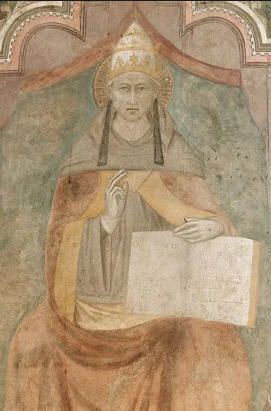
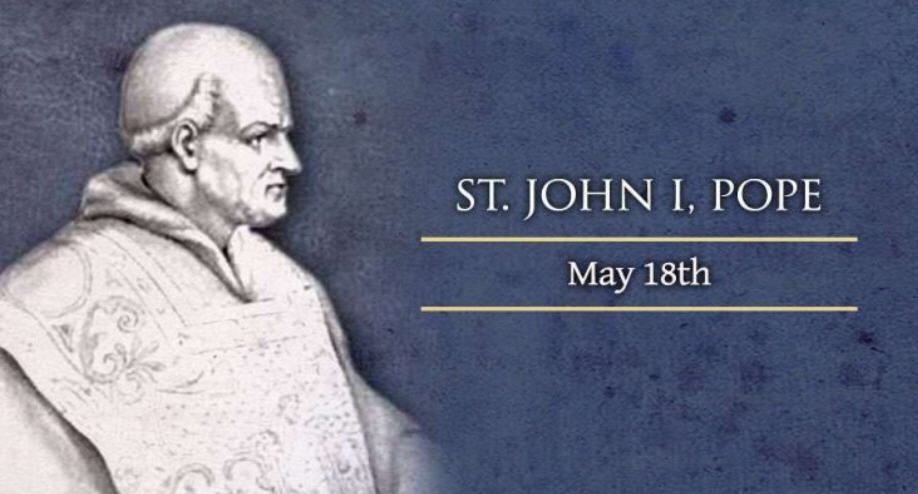
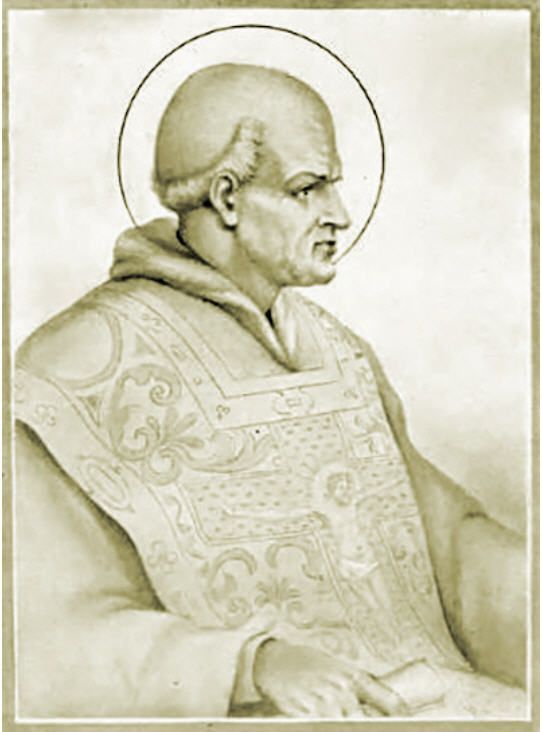
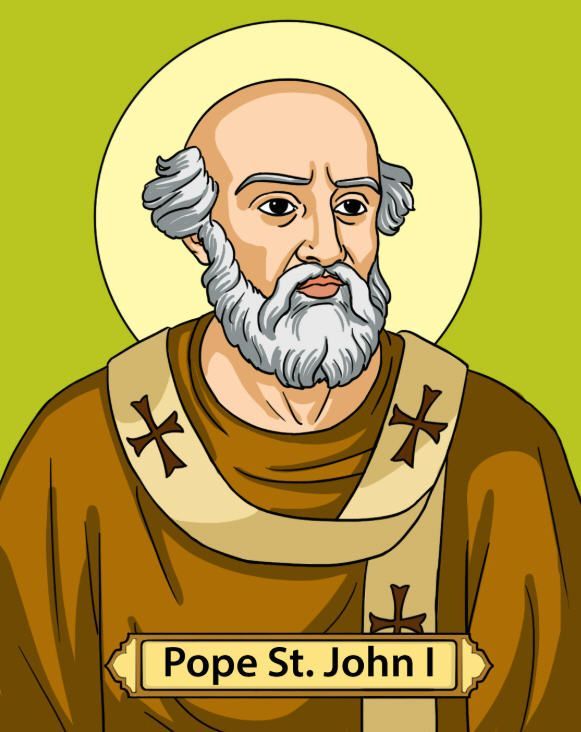
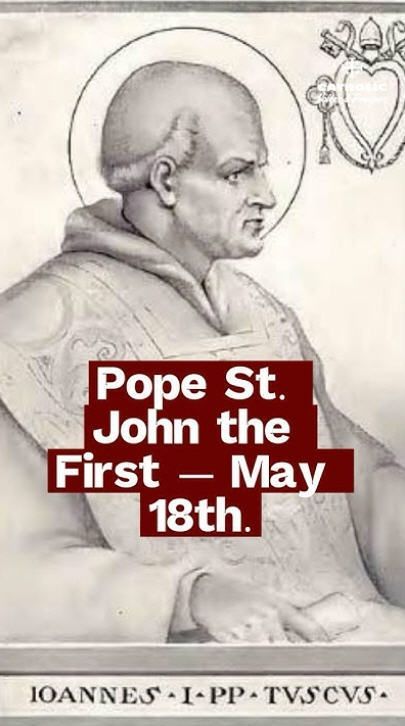
Saint John I, Pope - May 18
Quote:
Who does not envy the happiness of a martyr in his dungeon, when he beholds the inward joy, peace, and sentiments of charity with which he closes his eyes to this world! And much more when he contemplates in spirit the glory with which the soul of the saint is conducted by angels, like Lazarus, to the abodes of immortal bliss! On the contrary, the wicked tyrant cannot think himself safe upon his throne… At best, his treacherous pleasures are a wretched exchange for the true joy and peace of virtue; nor can he fly from the torment of his own conscience, or the stench of his guilt. How dreadfully are his horrors increased upon the approach of death! And how will he to all eternity condemn his extravagant folly, unless by sincere repentance he shall have prevented everlasting woes! ~Butler’s Lives of the Saints
Reflection:
In 451, the Council of Chalcedon taught that Jesus had both a human and divine nature, and those two natures were united in the one Person of Jesus Christ. This doctrine was established in response to the Arian heresy plaguing the Eastern Roman Empire, which taught that Jesus was created by the Father and, therefore, neither co-equal with Him nor divine. After Chalcedon countered this heresy, the Arian clergy and even the Byzantine emperor tried to move closer to acceptance, but many of them didn’t go all the way. Instead, many former Arians fell into other middle-of-the-road heresies that failed to fully accept the two natures of the Son of God. In 482, Byzantine Emperor Zeno issued a document called the Henotikon. This document attempted to find a middle ground between the official Church teaching on the nature of Christ as defined in the Council of Chalcedon, and the Arian view. Emperor Zeno’s successor, Basiliscus, continued in this error of faith.
In 518, Justin I succeeded Emperor Basiliscus as the Eastern Roman Emperor. Shortly afterward, he accepted the position of the pope and the Council of Chalcedon. In 523, Emperor Justin issued an edict mandating the acceptance of the Council of Chalcedon throughout the Eastern Empire, and demanding that all Arians turn their churches over to Catholics. At that time in the West, Rome was under the control of Theodoric the Great, the king of the Ostrogoths. Theodoric was an Arian, which gave rise to ongoing tensions between him and the pope, as well as all orthodox Catholics. Though Theodoric was mostly accommodating of Chalcedon Christians (including the pope), when the Eastern Roman Emperor Justin I issued his edict in 523 against the Arians, Theodoric was outraged. He threatened that if the edict were not rescinded, he would treat all Chalcedon Catholics in the West in the same way that Arians were being treated in the East, even promising bloodshed.
In that same year, a deacon in Rome, Archdeacon John, was elevated to the papacy, becoming Pope John. Shortly after that, the outraged King Theodoric forced Pope John to travel to Constantinople in an effort to convince Emperor Justin to rescind his edict. Pope John reluctantly went, accompanied by a number of bishops and Roman senators. When Pope John arrived in Constantinople, Emperor Justin warmly welcomed him and the two were clearly of the same mind. It is said that the emperor traveled twelve miles outside of the city gate to meet the pope and when they met, the emperor bowed to the ground in homage. On their way into the city, the pope is said to have cured a blind man. Regarding the matter at hand, Pope John might have encouraged the emperor to treat the Arians gently, but in no way did he carry out King Theodoric’s demand to convince the emperor to rescind his edict. Pope John was unwaveringly Catholic and fully accepted the teachings of the Council of Chalcedon.
When word reached King Theodoric that Pope John did not carry out his order, the king was outraged. First, he imprisoned and later executed one of Pope John’s closest friends, the philosopher Boëtius. Then, when Pope John returned to Italy, King Theodoric immediately had him, the other bishops, and senators arrested and jailed in Ravenna, not permitting Pope John to return to Rome. Since Pope John was already quite frail and in ill-health, he did not survive long in the dungeon. Though he was not directly executed by the king, the Church has nonetheless named Pope Saint John I as a martyr for the faith.
If Pope John would have compromised on the faith of the Church, the king would have been grateful and treated him well. But the pope had a duty to proclaim the one true faith, without regard for his own physical well-being. This is what Pope John did, and that is why he is now a saint in the courts of Heaven.
As we honor this holy martyr, consider any ways that you are tempted to compromise your own faith for the sake of “peace at all costs.” The secular world often tempts us to downplay our faith, especially our moral convictions, for the sake of a false unity. There are many objective evils today that are being promoted by the secular world as good: abortion, confusion about sexual identity, materialism, and atheistic socialism to name a few. Allow Pope Saint John I to inspire you so that you will have courage in the face of such temptations. Commit yourself to the truth so that you will be a purer instrument of the saving truths that will lead those most in need to eternal salvation.
Prayer:
Pope Saint John, you chose to value the truth of the Catholic faith over your own life. You remained steadfast in the proclamation of the Gospel until the end. Please pray for me, that I will never waver in my faith, and will never give in to temptations to water down that faith. May I have the same courage that you had so that God will be able to use me to reach out to those who need to know His saving truths. Saint John I, pray for me. Jesus, I trust in You.
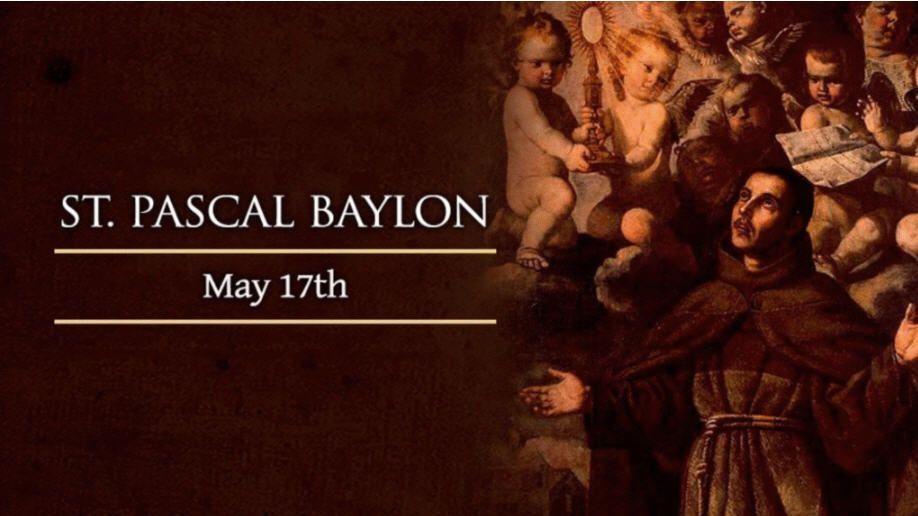
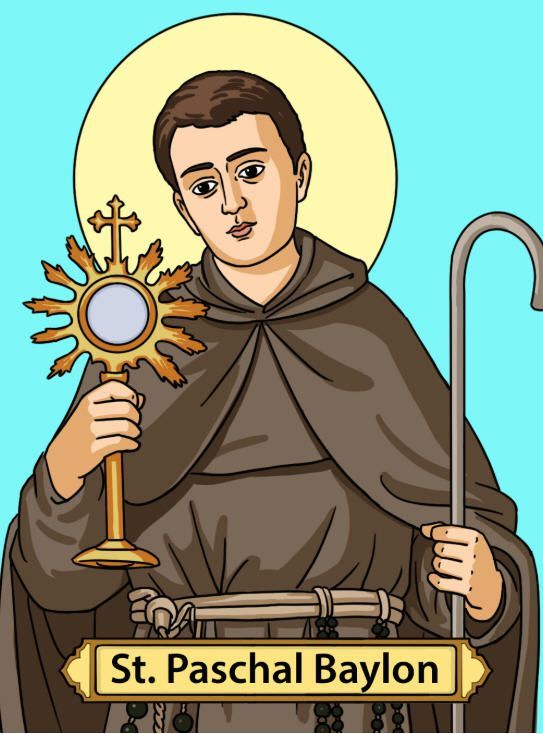
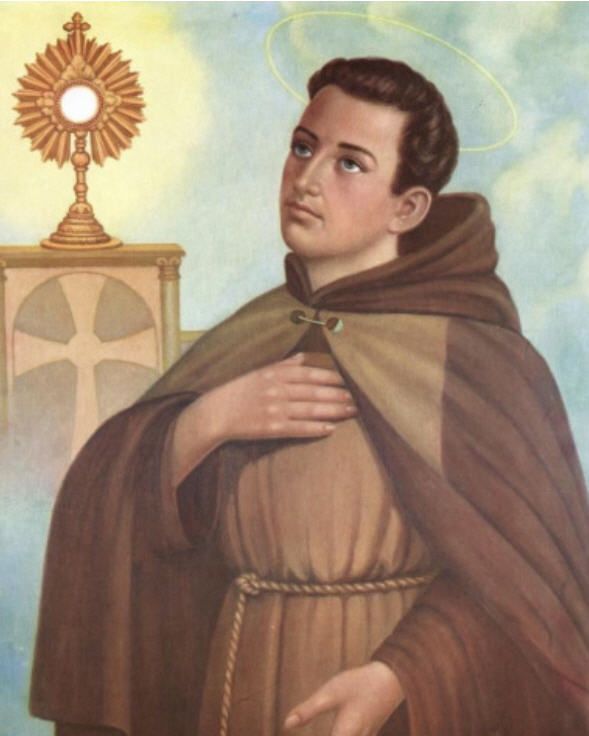
Saint Pascal Baylon - May 17
Quote:
“Let your heart be more attentive than your head; it is the heart that the Lord looks at.” — St. Paschal Baylón
Reflection:
St. Paschal Baylón was born in 1540 in a small village in Aragon, Spain, to a poor but deeply faithful family. From a young age, he worked as a shepherd, spending long hours in prayer and contemplation. Despite having little formal education, Paschal developed a deep understanding of the faith through his devotion to the Blessed Sacrament. At 24, he joined the Franciscan Order as a lay brother, choosing a life of humility, service, and intense Eucharistic devotion. Paschal performed humble tasks in the monastery, such as porter and cook, and became known for his simplicity, kindness, and constant prayer. His reputation for holiness and wisdom drew many seeking advice. St. Paschal died in 1592 on the feast of Pentecost, and he was later named the patron saint of Eucharistic congresses and societies.
Practical Lessons
- Find Holiness in Ordinary Work: St. Paschal found God even while performing simple tasks. Whether washing dishes, answering emails, or mowing the lawn, offer your work as a prayer to God, turning daily duties into acts of love.
- Make Time for Prayer Daily: Even with a demanding workload, Paschal prioritized time with the Blessed Sacrament. Set aside just 5–10 minutes a day for quiet prayer or Eucharistic adoration, even if your schedule is busy.
- Practice Kindness with Everyone: Paschal’s kindness attracted people from all walks of life. In today’s world, this could mean smiling at a stranger, sending an encouraging text, or choosing patience during frustrating moments.
Prayer
Saint Simon Stock - May 16
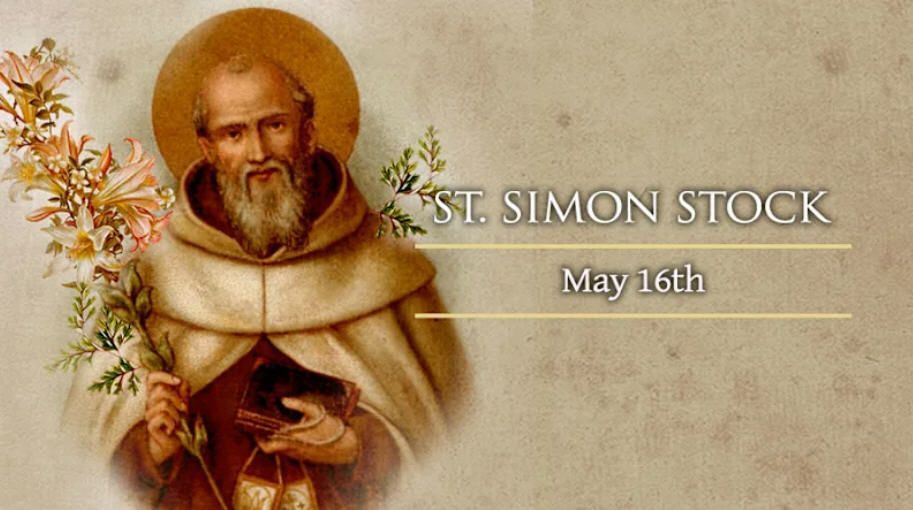
Quote:
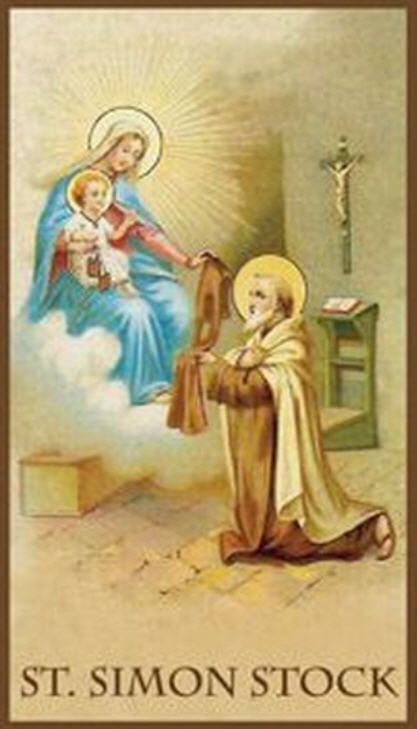
“Receive, my beloved son, this scapular of your Order; it is a special sign of grace.” — Our Lady to St. Simon Stock
Reflection:
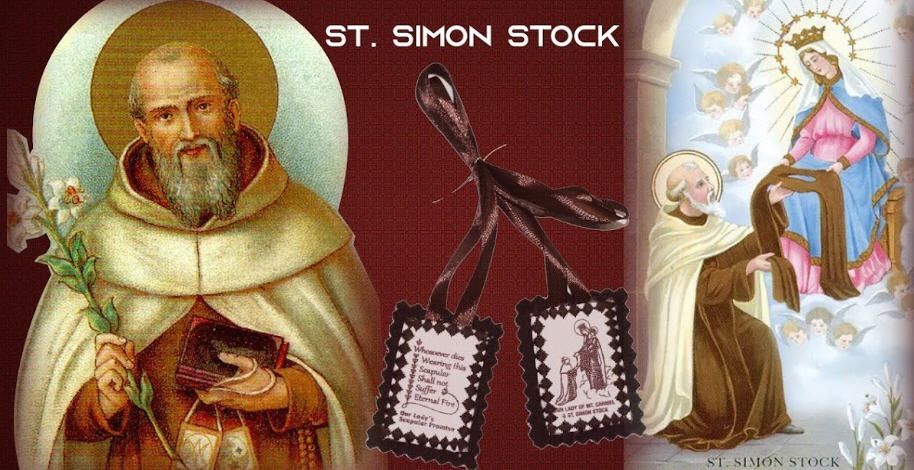
St. Simon Stock was born around 1165 in England. From a young age, he sought a deep relationship with God, living for a time as a hermit dedicated to prayer and penance. Drawn to community life, he later joined the newly established Carmelite Order when it arrived in Europe from the Holy Land. As Prior General of the Carmelites, Simon faced the challenge of strengthening and expanding the Order amid skepticism and hardships. Tradition holds that the Blessed Virgin Mary appeared to him, giving him the Brown Scapular as a sign of her protection and a promise of salvation for those who wore it faithfully. St. Simon Stock died in 1265, and his devotion to Mary and leadership greatly influenced the Carmelite Order and Catholic spirituality worldwide.
Practical Lessons
- Stay Committed When Facing Challenges: St. Simon Stock persevered in leading the Carmelite Order even when it struggled for acceptance. In daily life, this teaches us to stay committed to our goals—whether in work, family, or faith—even when immediate results aren’t visible.
- Honor Mary in Your Routine: Simon’s devotion to Mary reminds us to include Marian prayers, like the Rosary or the Angelus, as part of our daily schedule, offering even small moments of the day to her care and intercession.
- Use Sacramentals Thoughtfully: The Brown Scapular is a sign of devotion, not just a good-luck charm. Today, we can wear religious items like medals or scapulars as reminders to live out our faith actively through charity, prayer, and trust in God.
Prayer
St. Simon Stock, chosen servant of Our Lady of Mount Carmel, pray for us. Help us to stay faithful to Christ and His Mother through our daily actions. Obtain for us the grace to trust in Mary’s protection and to live lives worthy of the promises of Christ. May we, like you, persevere in faith through trials and always seek the guidance of the Blessed Virgin. Amen.
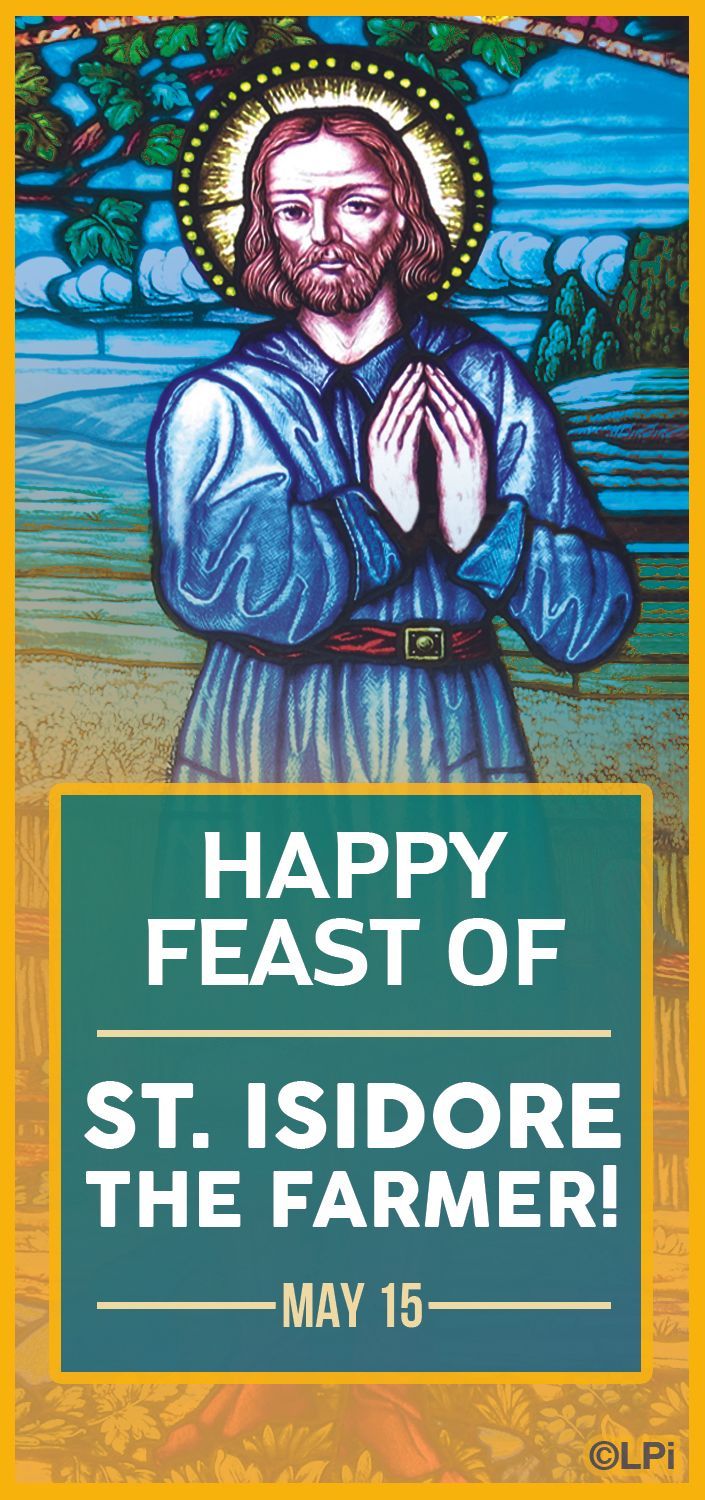
Saint Isidore the Farmer - May 15
Quote:
But seek first the kingdom of God and his righteousness, and all these things will be given you besides. of fear and terror. ~from the First Secret of Fátima
Reflection:
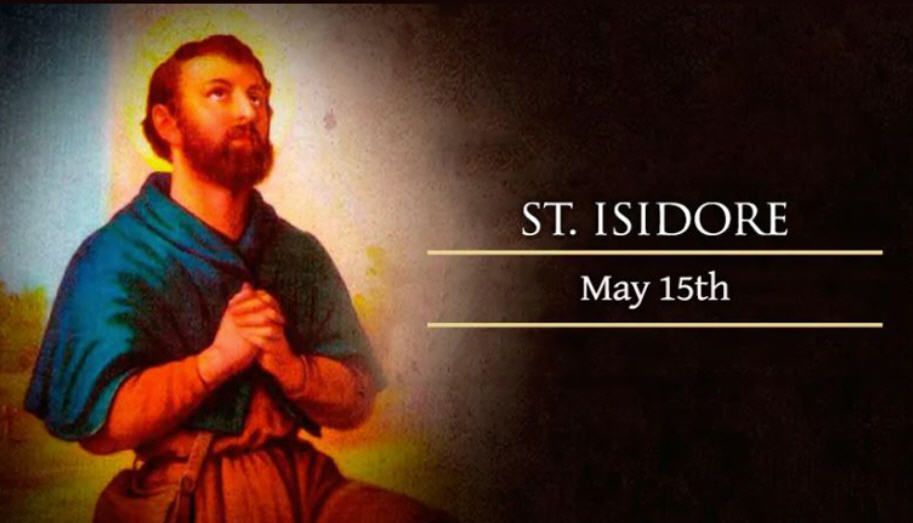
Saint Isidore, whom we honor today, is often called Isidore the Laborer, or Isidore the Farmer. He was an ordinary man, husband, and father who lived a humble and simple life working the fields for a landowner. His extraordinary faith, by which he always sought first the Kingdom of God, sets for us an excellent example of achieving extraordinary sanctity in the ordinary grind of daily work.
Isidore was born into material poverty in Madrid. His parents, however, were rich in virtue and fostered in him a deep faith. At his baptism, he was given the name Isidore, after Saint Isidore of Seville, the great Spanish scholar and bishop of Seville who lived about 500 years earlier. Because of the family’s poverty, Isidore the Laborer did not receive an education. Instead, from a young age, Isidore worked as a hired hand for a wealthy landowner. The landowner grew very fond of Isidore and treated him as a son, even entrusting him with the management of his estate. It is believed that Isidore lived for sixty years as a laborer, but other speculation is that he may have died around the age of forty.
What is it that elevated this humble and simple man to the ranks of the saints of the Church? To begin, Isidore is said to have been exceptionally generous to the poor. Though poor himself, he and his wife regularly distributed the little they had to those who were in even greater need. He is also said to have been a man of deep prayer. He would regularly attend daily Mass before work, putting God first every day. And as a result of his intercession, miracles abounded, not only during his life but also after his death.
Isidore and his wife had one son. One legend states that their infant child fell into a large pit. Isidore and his wife prayed fervently, and suddenly, the water in the pit began to rise. Very soon, the water had carried the boy to the surface, and Isidore and his wife were then able to pull him out.
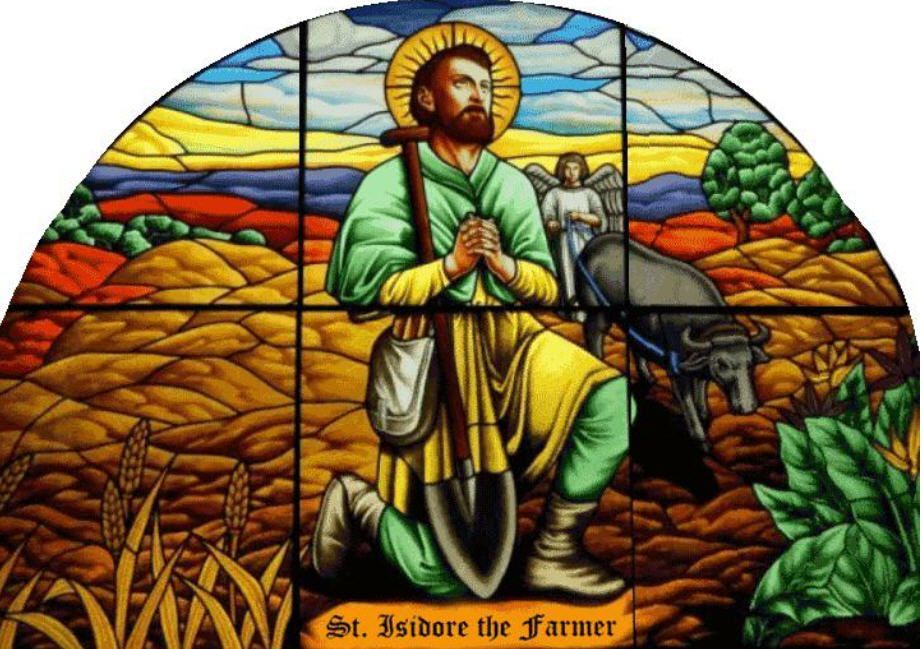
Another legend states that because Isidore attended Mass each morning, he showed up later to work than the other hired hands. When the landowner received complaints that Isidore was late for work, he decided to investigate. Sure enough, the landowner discovered that Isidore was regularly later than the others. When the landowner went to confront Isidore about this, he was met with a great surprise. As he walked toward Isidore plowing in the field, he saw that there were others plowing alongside him who looked like angels, using angelic-looking oxen. Thus, God rewarded Isidore with the help of angels to accomplish even more work than the others because Isidore put God first every day.
Isidore also cared for all of God’s creatures with great concern. According to one legend, on a winter day, when Isidore was carrying a sack of grain to be milled, he saw some hungry birds and shared some grain with them, prompting criticism from a coworker. But after Isidore’s diminished sack of grain was milled and returned to him, he had twice as much flour as the others.
Other legends describe Isidore as bringing his landowner’s daughter back to life, raising a spring of water in a dry place to give drink to the thirsty, and producing a full pot of food to feed poor, hungry visitors.
Isidore’s wife, Maria, was also believed to be quite saintly. When their only son died at a very young age, the couple made a promise of celibacy and jointly dedicated themselves solely to God. In Spain, Maria is referred to as Santa María de la Cabeza (Saint Mary of the Head). Miracles have been attributed to her, and to this day, the relic of her head is carried in procession. It is believed that, through her intercession on multiple occasions, rain has fallen in the countryside during droughts.
After Isidore’s death, the miracles continued. Alfonso VIII, King of Castile, during a battle with the Muslims, reportedly had a vision of Saint Isidore who directed him and his army down a path of victory in 1212. That same year, after a flood, Saint Isidore’s body was miraculously exhumed from his grave and found to be incorrupt. Centuries later, when Phillip III, King of Spain, touched Saint Isidore’s body, he was miraculously cured of a serious illness. In all, there have been more than 400 miracles attributed to Isidore’s intercession throughout the centuries.
Another great honor given to this simple, poor, and humble farmer came at his canonization by Pope Gregory XV in 1622. He was canonized at the same time, in the same ceremony, with some of the most recognized and beloved saints in the history of the Church: Saints Ignatius of Loyola, Francis Xavier, Teresa of Ávila, and Philip Neri.
Saint Isidore is the patron saint of Madrid, and his feast is widely celebrated in that town and throughout Spain. He is also honored in many rural communities in Chile, Nicaragua, Peru, Philippines, and the United States. Saint Isidore is a saint for the working man. While at work, he prayed continuously, offering his work as an act of love to God. Saint Isidore’s life magnifies the dignity of work, and shows the common laborer the path to sanctity. Daily work and toil have the potential of being a way of honoring God. Saint Isidore put God first in his life. From his faith and love of God, his work, charity, and dignity shone forth.
Prayer: Saint Isidore, you were born into poverty and worked by the sweat of your brow throughout your life. All that you did, you did to give God glory. Even small tasks were sanctified in your life. Please pray for me, that I will find dignity and holiness by doing the most mundane chores and labors of my life with love. May I always seek first God’s Kingdom, making His will the center of my life. Saint Isidore the Laborer, pray for me. Jesus, I trust in You.
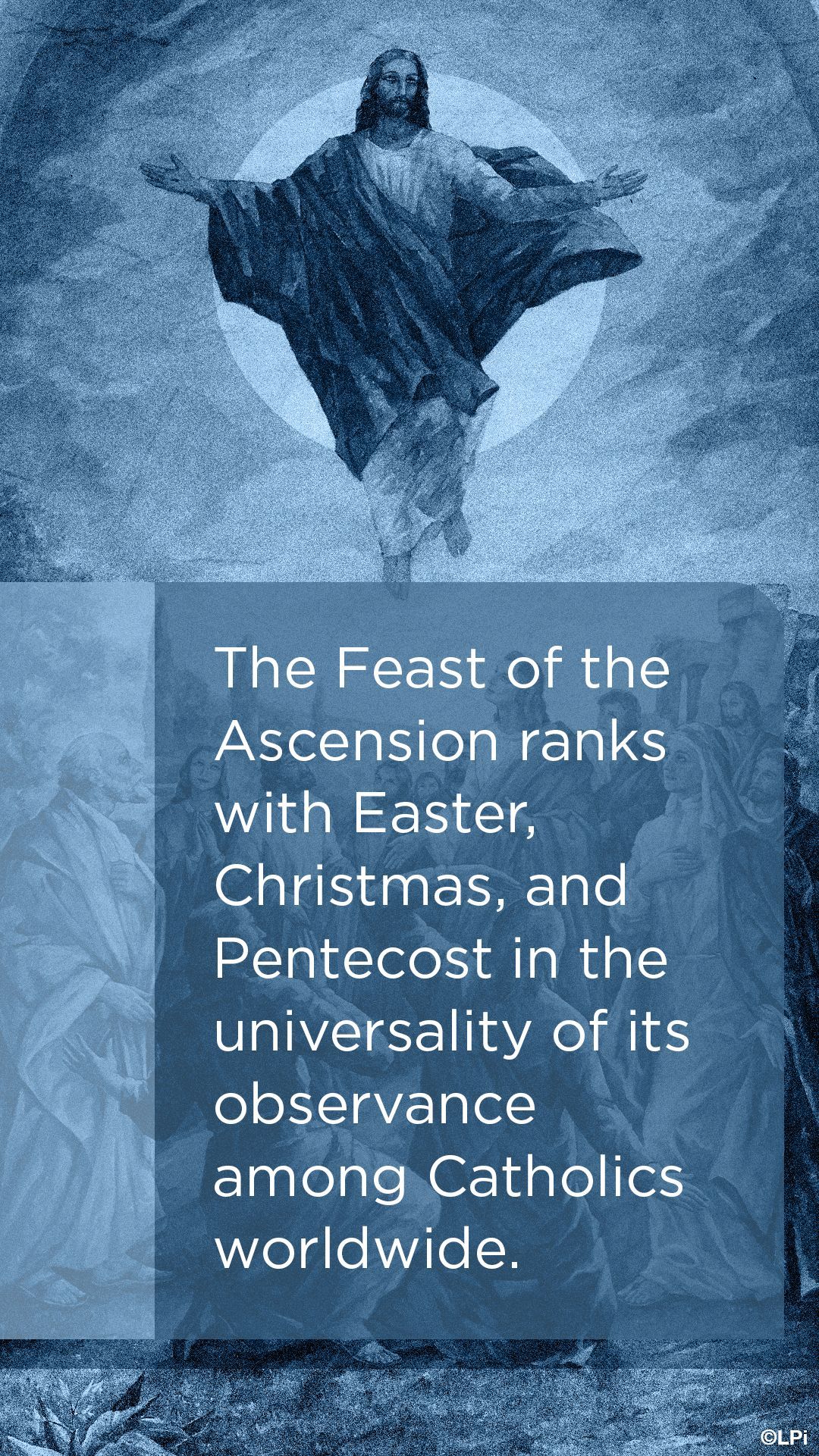
The Ascension of the LORD - May 14
Quote:
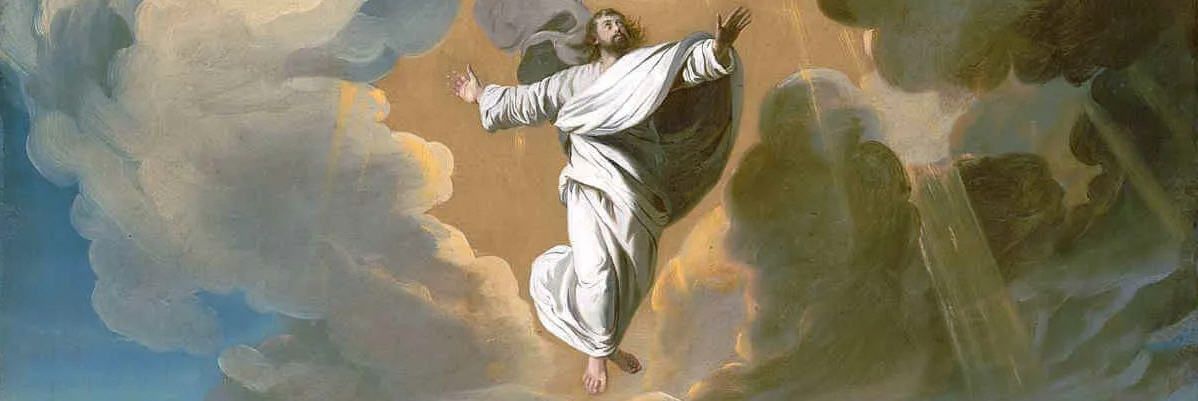
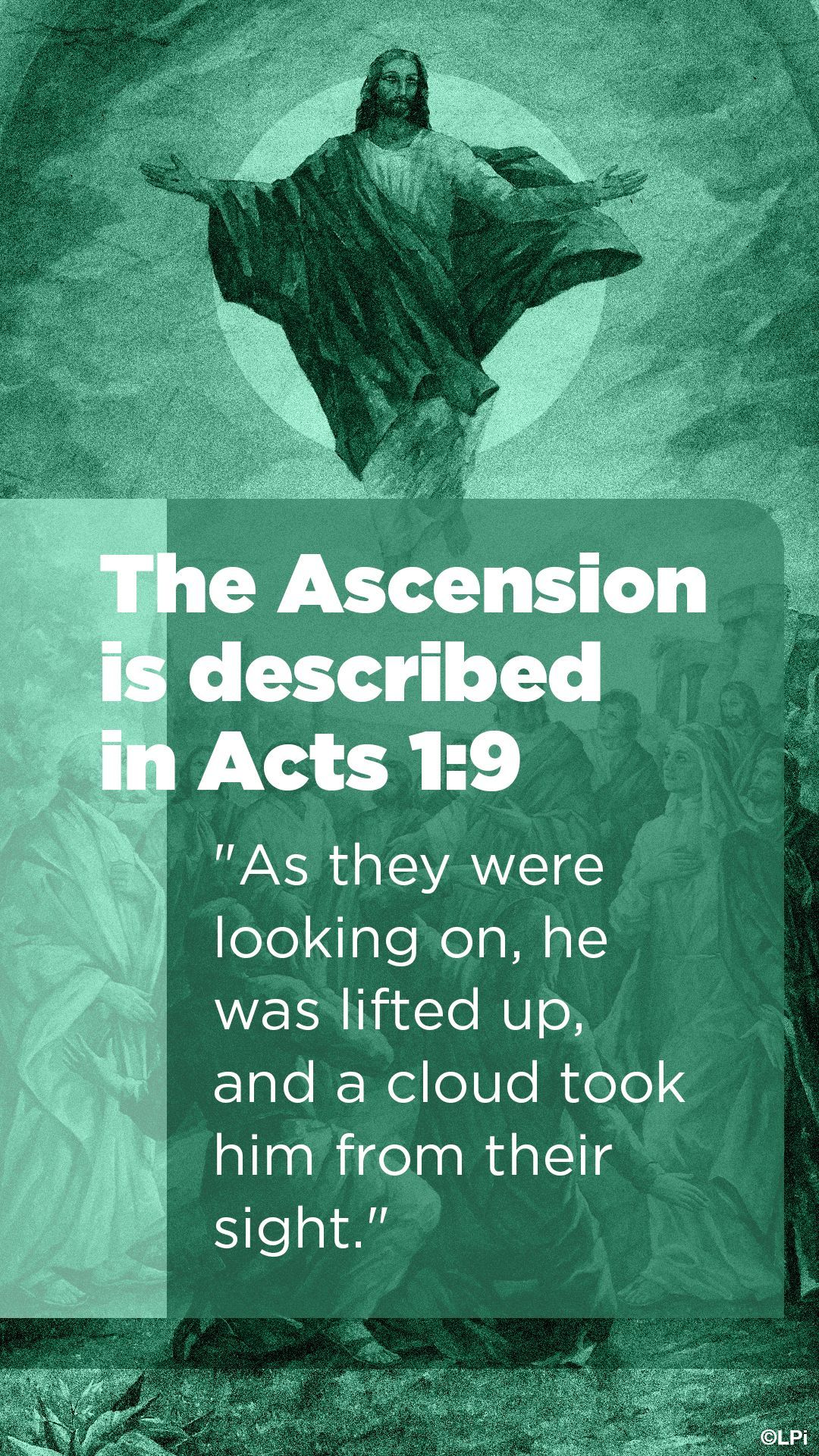
When they had gathered together they asked him, “Lord, are you at this time going to restore the kingdom to Israel?” He answered them, “It is not for you to know the times or seasons that the Father has established by his own authority. But you will receive power when the holy Spirit comes upon you, and you will be my witnesses in Jerusalem, throughout Judea and Samaria, and to the ends of the earth.” When he had said this, as they were looking on, he was lifted up, and a cloud took him from their sight. While they were looking intently at the sky as he was going, suddenly two men dressed in white garments stood beside them. They said, “Men of Galilee, why are you standing there looking at the sky? This Jesus who has been taken up from you into heaven will return in the same way as you have seen him going into heaven.” Then they returned to Jerusalem from the mount called Olivet, which is near Jerusalem, a sabbath day’s journey away.
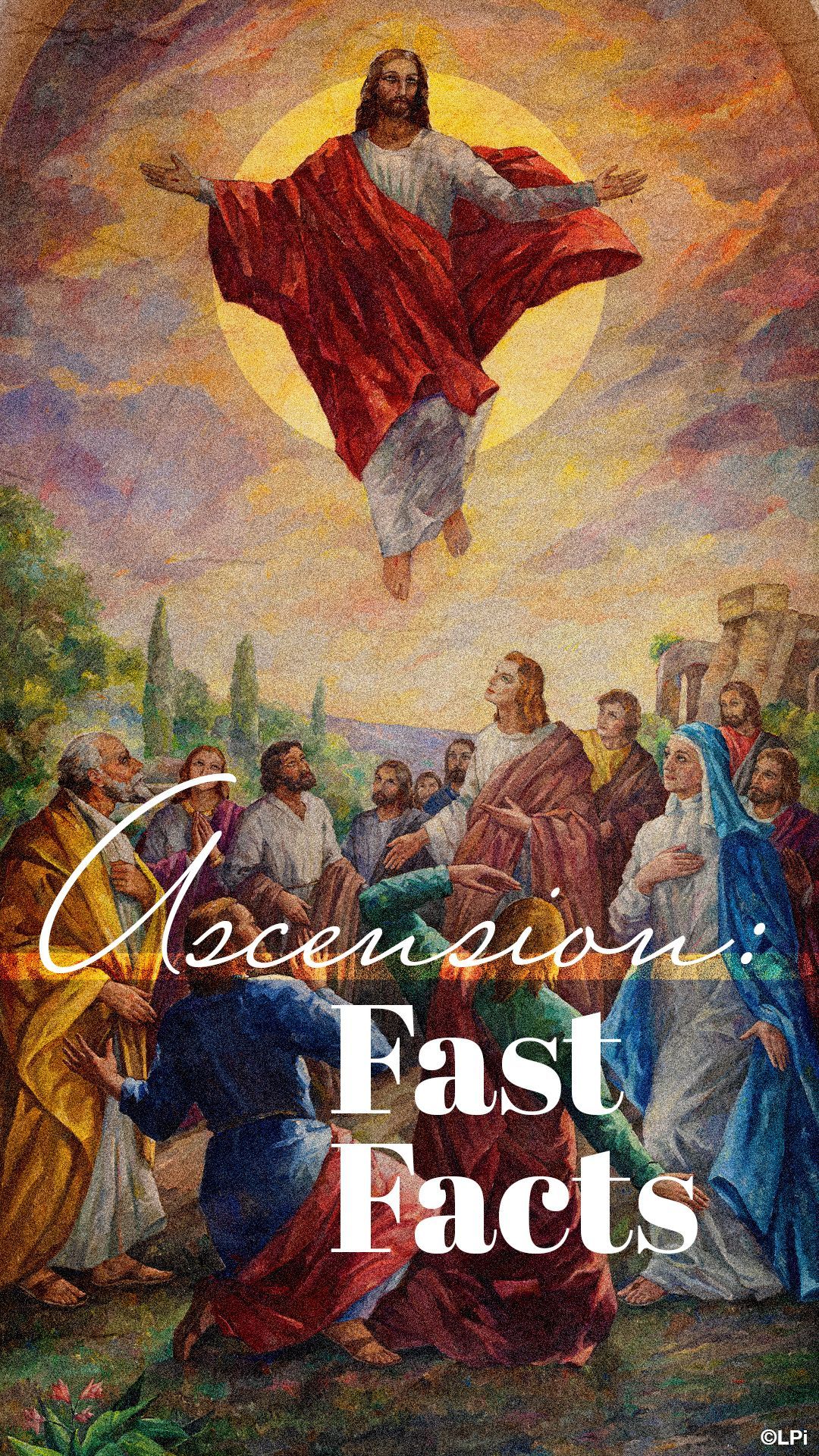
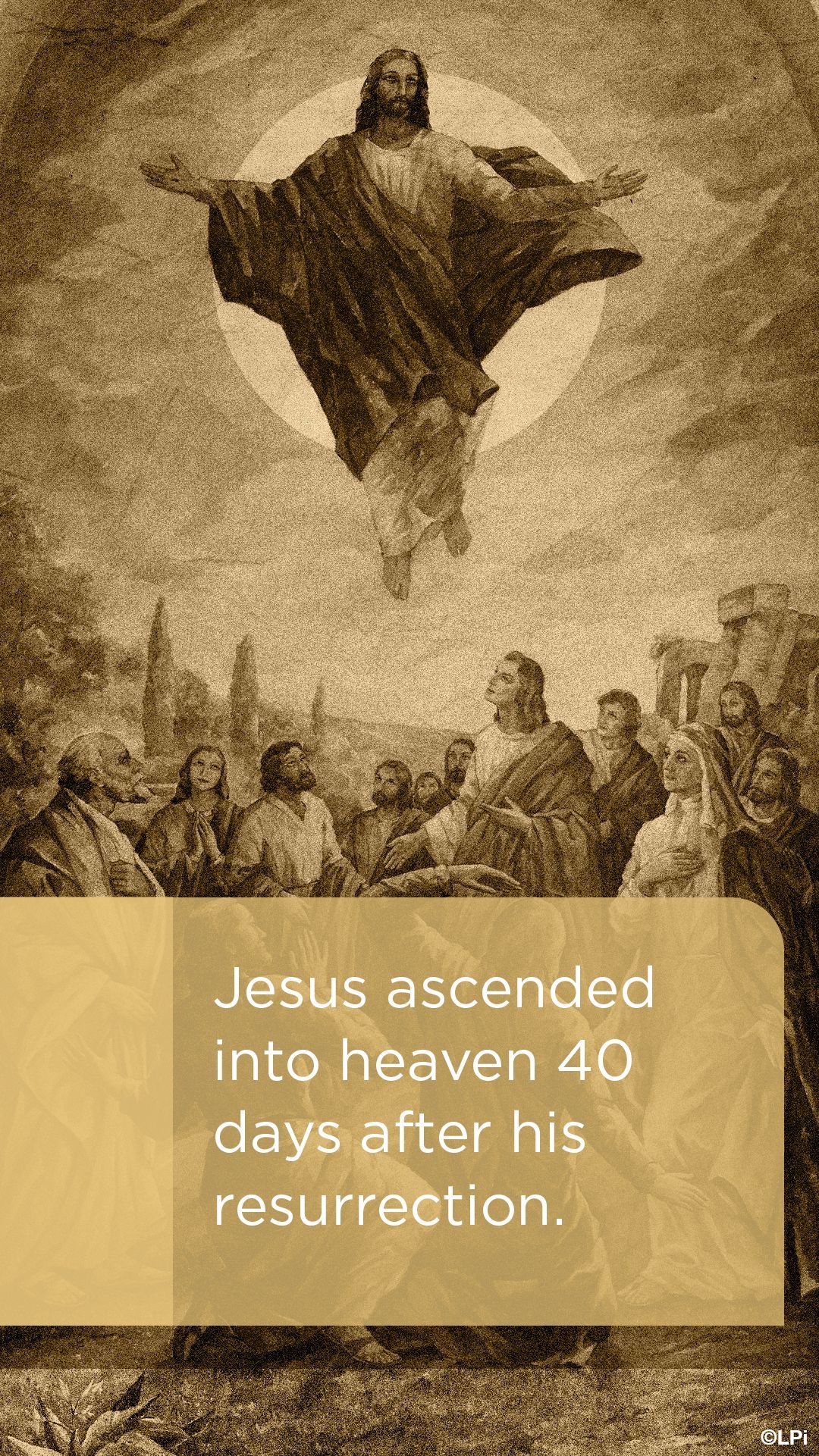
Reflection: The Solemnity of the Ascension of the Lord commemorates the fortieth day after the Resurrection when Jesus ascended body and soul into Heaven and took His seat at the right hand of His Father. Traditionally, the location of the Ascension is believed to be less than a mile east of the Old City of Jerusalem, and that spot is marked by the Chapel of the Ascension, which is said to contain a miraculous imprint of the footprints of Christ before He ascended. The event of the Ascension is found in the Gospels and Acts (Mark 16:19–20; Luke 24:50–53; Acts 1:6–12). It is also alluded to in various other passages (John 6:62; Ephesians 4:7–10; 1 Timothy 3:16; 1 Peter 3:21–22).
Only Jesus and His Blessed Mother have entered into the glories of Heaven, body and soul. Jesus’ Ascension implies that He did so by His own authority and power. The Blessed Virgin Mary’s Assumption implies that she entered Heaven, body and soul, by God’s power, and not her own.
The Ascension marks the completion of Jesus’ earthly mission. He first united His divine nature with human nature through the Incarnation at the moment of the Annunciation. Saint Thomas Aquinas teaches that from that moment on, Jesus, the Son of God, experienced three types of knowledge. First, being God, He had beatific knowledge, that is, a direct knowledge of His essence, the Father’s essence, and the Holy Spirit’s essence. Second, He had the perfection of infused knowledge, that is, a bestowal of all truths given to the angels in Heaven, especially those truths necessary for the completion of His divine mission. Third, He began to acquire learned knowledge, or experiential knowledge. This was the form of knowledge attained through His human nature from the senses and His human reason.
As Jesus fulfilled His mission through life, His learned knowledge continued to grow until it was perfected in human form. It was never imperfect in the sense of sin, but only in the sense of growth through human experience and human love. He experienced all things, allowed the perfection of His beatific and infused knowledge to guide His human experiences and brought those human experiences and knowledge to perfection. His free embrace of the Cross manifested the perfection of divine love in human form, and His Resurrection brought that perfect unity of human and divine love to a new and transformed resurrected state of human existence. But that was not all. Today we commemorate the fact that Jesus took His perfected human nature into the Beatific Vision, enabling humanity itself to follow. The Blessed Virgin Mary was the first to do so given her sinless state.
The final stage of the salvation of humanity will take place when Jesus returns to judge the living and the dead. At that time, every human body will rise, will endure the final purification and transformation, and will share in the new and resurrected state in which the faithful will be able to stand, body and soul, before the Most Holy Trinity and experience the fullness of the Beatific Vision forever. What Jesus has already accomplished in His human form is what we look forward to in hope at the end of time.
The Feast of the Ascension was celebrated annually from as early as apostolic times. Saint John Chrysostom, Saint Gregory of Nyssa, and Saint Augustine all attest to this fact. When the Council of Nicaea set the date for the celebration of the Resurrection in 325, it chose to keep Easter on the first Sunday after the first full moon occurring on or after the vernal equinox in spring. This decision also set the day for the Ascension being forty days after Easter, on a Thursday. Today, many ecclesiastical provinces transfer the Thursday celebration to the following Sunday to provide for a wider celebration.
Though every aspect of Christ’s life is shrouded in mysteries which will only be fully understood by the faithful when they stand before Him and behold the Beatific Vision, today we especially ponder this beautiful and profound mystery of our faith. As we celebrate the Ascension, try to prayerfully meditate upon the perfect unity of Jesus’ human and divine natures. Ponder further the truth that because the Son of God is both God and man, and He beholds His Father and the Holy Spirit as both God and man, He invites each of us to begin to share in that glorious vision. Only after we fully die in and with Him and rise to new life in and with Him will we be able to know Him clearly and share in His glorious resurrected and ascended life. Until that moment comes, it’s important to ponder that which is incomprehensible. We must know that we do not know, believe what is beyond belief, hope in that which is more than we can understand. God is a mystery; the Ascension is a mystery—but they are mysteries that must be penetrated by prayer. Do so today as we commemorate this holy culmination of the earthly life and mission of Christ.
Prayer:
My Ascended Lord, forty days after You rose from the dead You ascended to the right hand of the Father in Heaven, taking up Your throne from which You pour forth both judgment and mercy. As we honor this great mystery of Your divine and human life, I beg for mercy upon me and upon the whole world. Free us from all sin, and open the floodgates of Your mercy so that all people will share one day, body and soul, in the glory of Your Beatific Vision. Jesus, I trust in You.
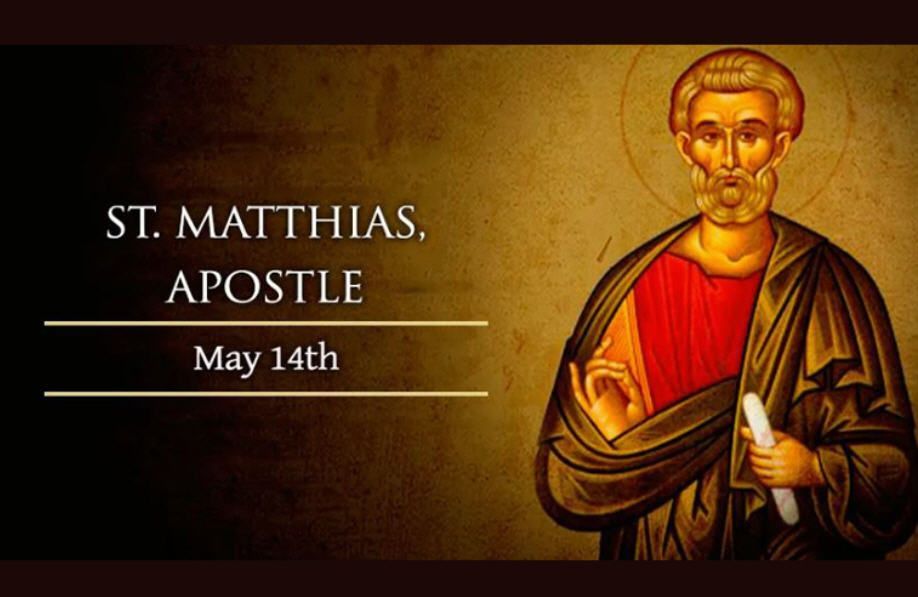
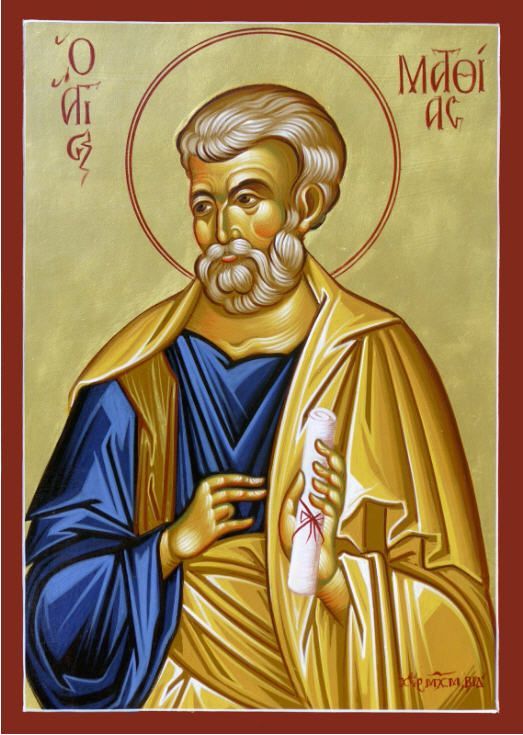
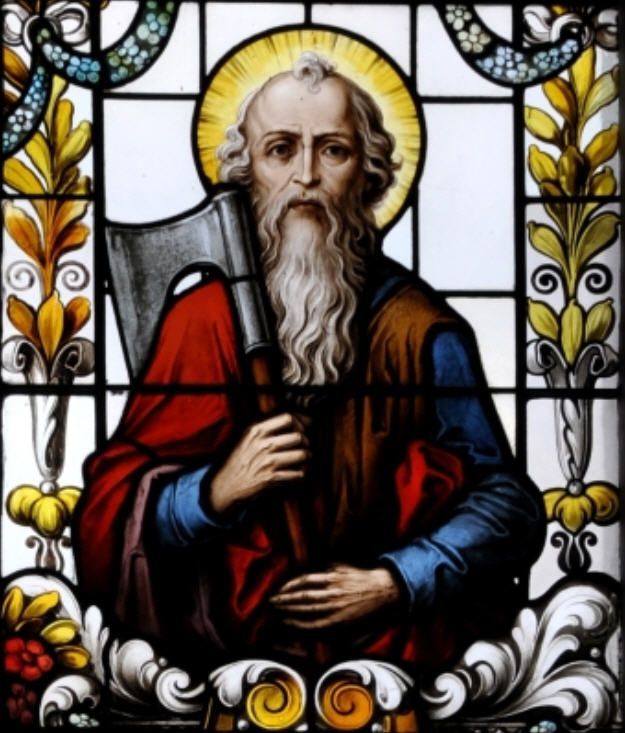
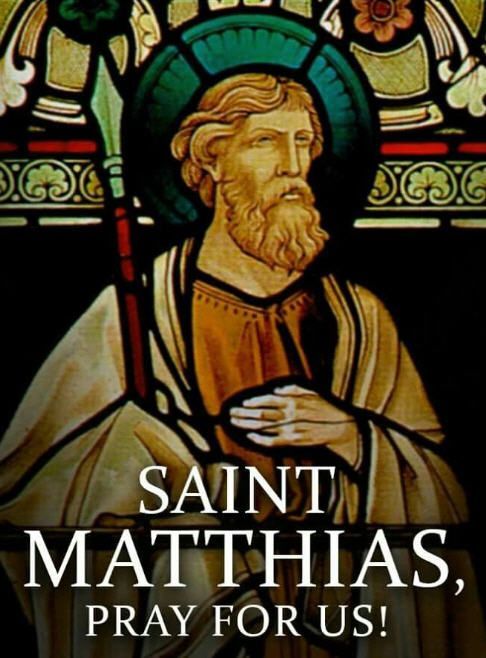
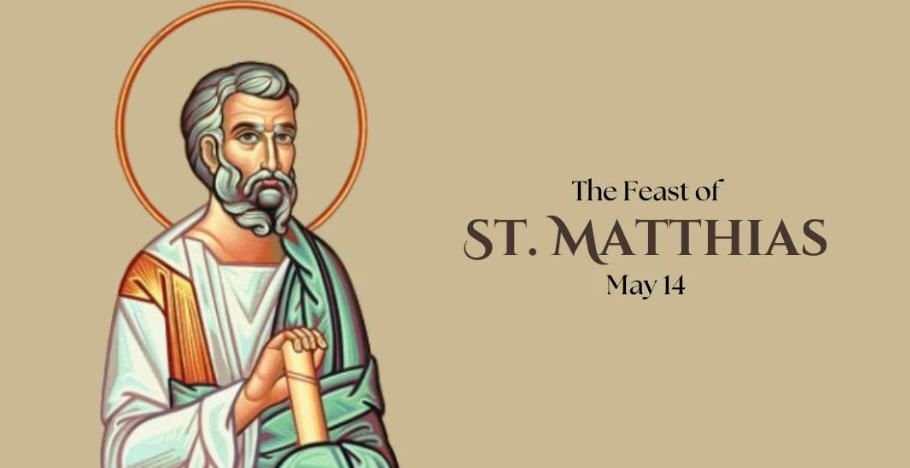
Saint Matthias the Apostle - May 14
Quote:
After this the Lord appointed seventy-two others whom he sent ahead of him in pairs to every town and place he intended to visit. He said to them, “The harvest is abundant but the laborers are few; so ask the master of the harvest to send out laborers for his harvest. Go on your way; behold, I am sending you like lambs among wolves.”
Reflection:
Very little is known about Saint Matthias, whom we honor today. He was most likely living in Galilee at the time that Jesus began His public ministry because he fits the description as “…one of the men who accompanied us the whole time the Lord Jesus came and went among us, beginning from the baptism of John until the day on which he was taken up from us…” (Acts 1:21–22). He certainly was among Jesus’ first followers.
After Judas betrayed our Lord, the Gospel of Matthew says that Judas “went off and hanged himself” (Matthew 27:5). In the Acts of the Apostles, the Apostle Peter describes Judas’ death this way: “…falling headlong, he burst open in the middle, and all his insides spilled out” (Acts 1:18). Regardless of how Judas died, he was one of the Twelve. Twelve is an important number in the Bible because there were twelve sons of Jacob (later given the name Israel) and those twelve sons established the twelve tribes that made up the people of Israel. Therefore, when Judas died, Peter recommended that someone be appointed to replace him so that the Apostles would once again number twelve. Peter quoted Psalm 109 that prophesied, “May another take his office” (Acts 1:20).
In order to pick a suitable successor, the approximately 120 disciples who were gathered together at that time in Jerusalem, perhaps in the upper room where the Last Supper had been celebrated, elected two who had been with Jesus from the beginning. Most likely these men were among the seventy-two disciples that Jesus had sent out on a mission of evangelization during His public ministry. The Acts of the Apostles describes it this way: “So they proposed two, Joseph called Barsabbas, who was also known as Justus, and Matthias. Then they prayed, ‘You, Lord, who know the hearts of all, show which one of these two you have chosen to take the place in this apostolic ministry from which Judas turned away to go to his own place.’ Then they gave lots to them, and the lot fell upon Matthias, and he was counted with the eleven apostles” (Acts 1:23–26).
Even though there were about 120 disciples gathered together, the Twelve were singled out as Apostles. This election of Matthias took place prior to Pentecost, so when the Holy Spirit came, it came upon Matthias as an Apostle, and the Twelve as a united body, along with the rest of the disciples.
One significant theological point to consider is that because it was Peter who organized the elevation of a disciple to the responsibility of Apostle, it is clear that the Apostles did not not believe that Jesus intended the role of Apostle to end with the deaths of the Twelve. Jesus intended their ministry to continue and even to expand beyond twelve as the Church expanded beyond Jerusalem. The appointment of Matthias as an Apostle clearly teaches us that the pope, the successor of Saint Peter, has the authority and responsibility to appoint new Apostles—bishops—as needed.
After this mention of Matthias in the Acts of the Apostles, nothing more is said about him. We know nothing for certain about his life and ministry after his becoming one of the first bishops of the Church. According to various traditions, Matthias traveled north to Cappadocia, modern-day central Turkey, and then east to the Caspian Sea, modern-day Georgia. He is believed to have died a martyr by crucifixion or may have even been stoned and then beheaded. Other traditions state that he traveled south to modern-day Sudan and Ethiopia.
The Church Father from a century later, Saint Clement of Alexandria, quotes Saint Matthias as follows: “It behooves us to combat the flesh, and make use of it, without pampering it by unlawful gratifications. As to the soul, we must develop her power by faith and knowledge.” This quote reveals the deep spiritual knowledge Saint Matthias had regarding the importance of the mortification of the flesh and the spiritual necessity of faith. There is little doubt that the three years he spent as a disciple of Jesus prepared him for his ministry as a bishop. And there is little doubt that his ministry as a bishop brought about the conversion and sanctification of many.
Prayer:
Saint Matthias, you heard Jesus calling you to follow Him from the very beginning of His public ministry. You responded with generosity, fulfilling the humble role of a disciple and missionary. When you were chosen as one of the Twelve and ordained a bishop, you fulfilled your shepherding duty of spreading the Gospel to the ends of the earth. Please pray for me, that I will listen to the voice of God and respond to His call generously all the days of my life. Saint Matthias, pray for me. Jesus, I trust in You.
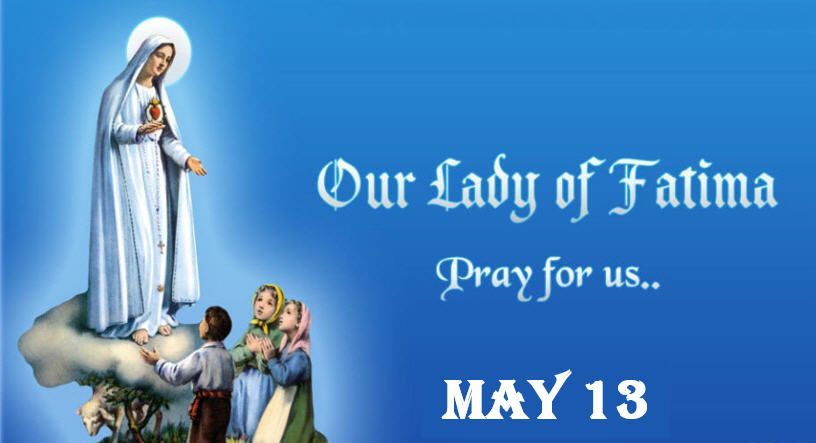
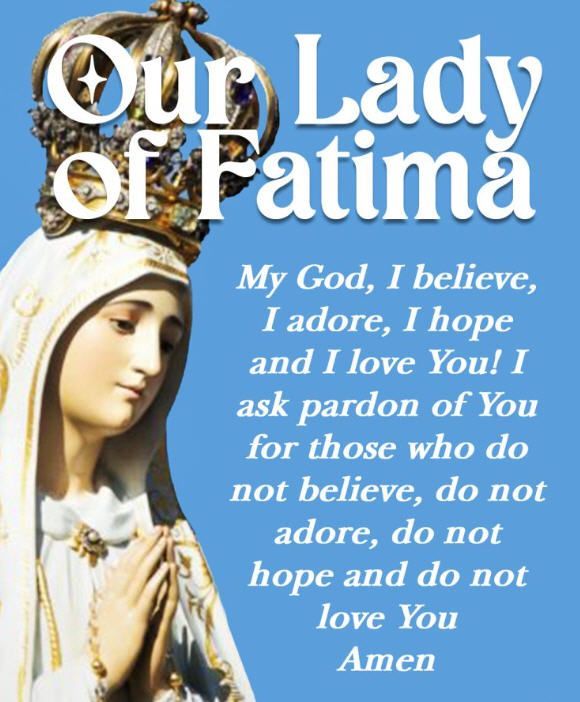
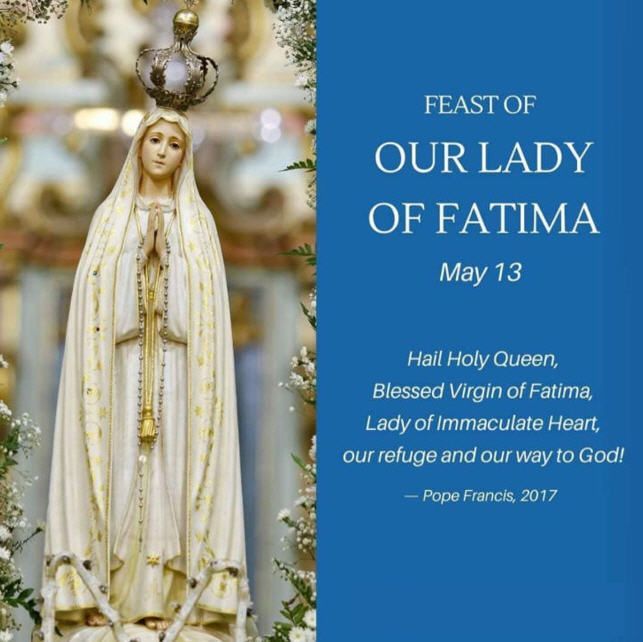
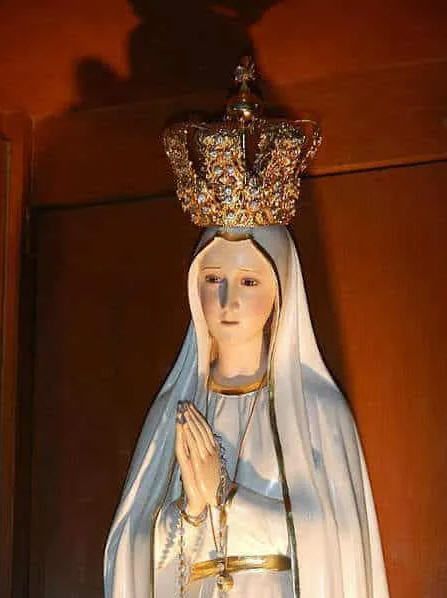
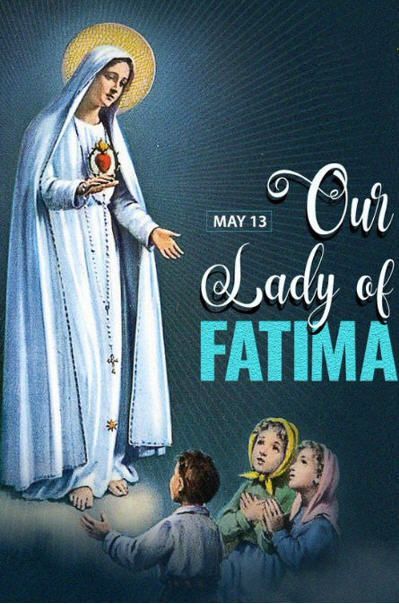
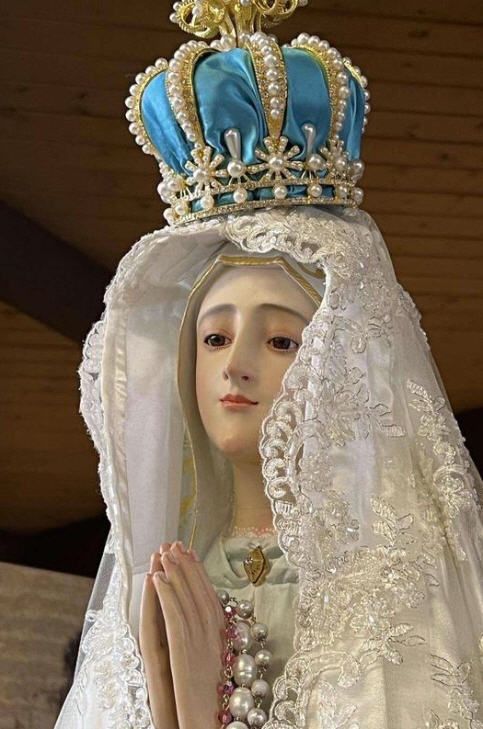
Our Lady of Fatima - May 13
Quote:
Our Lady showed us a great sea of fire which seemed to be under the earth. Plunged in this fire were demons and souls in human form, like transparent burning embers, all blackened or burnished bronze, floating about in the conflagration… The demons could be distinguished by their terrifying and repulsive likeness to frightful and unknown animals, all black and transparent. This vision lasted but an instant. How can we ever be grateful enough to our kind heavenly Mother, who had already prepared us by promising, in the first Apparition, to take us to heaven. Otherwise, I think we would have died of fear and terror. ~from the First Secret of Fátima
Reflection:
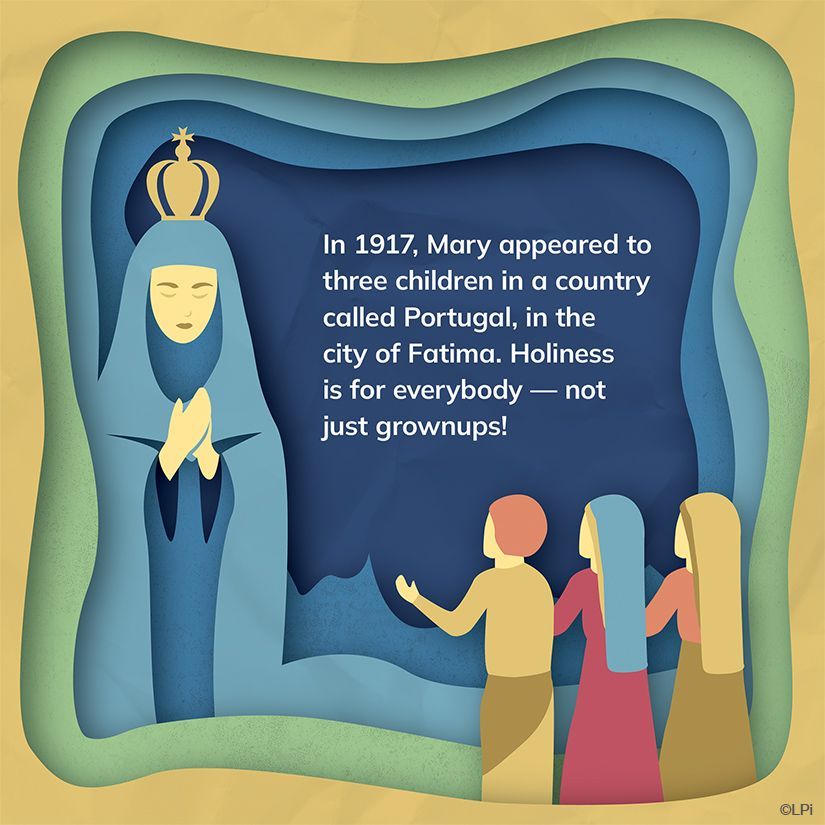
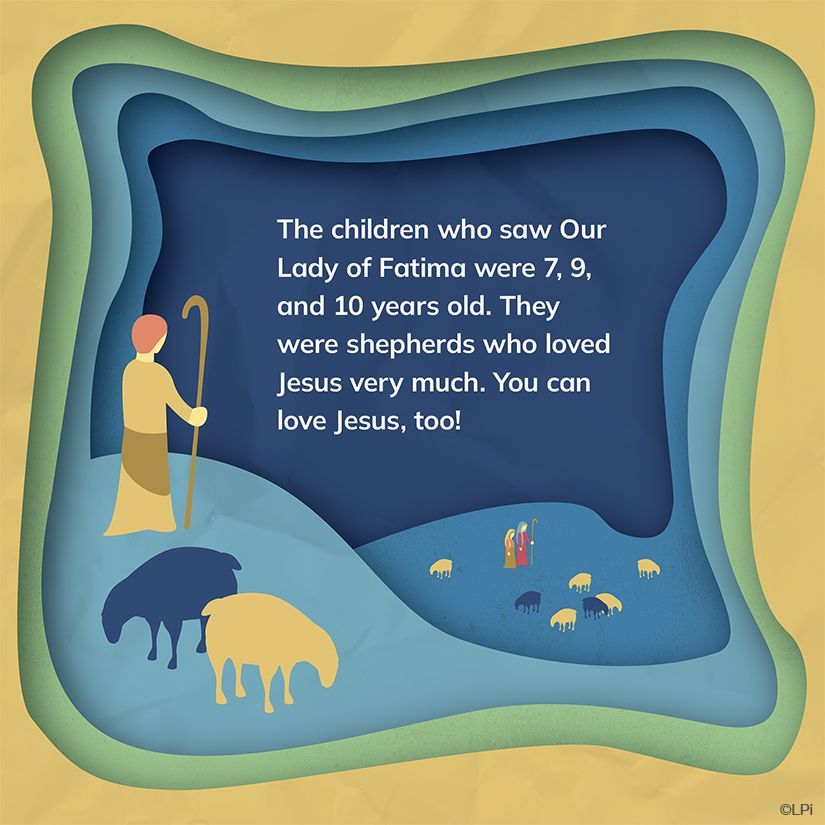
Three Portuguese shepherd children named Lúcia (age nine), Francesco (age eight), and Jacinta (age six), received three apparitions from the Guardian Angel of Portugal in 1916 and six apparitions from Our Lady of the Rosary in 1917. Lúcia later became a religious sister and received several more apparitions from Our Lady and Jesus Himself. These apparitions and their messages are among the most inspiring spiritual events to occur in modern times.
The first apparition took place in the spring of 1916 while the children were tending their sheep. While taking refuge in a cave during a storm, the children had eaten their lunches and prayed the rosary. They were playing games when they saw an angel in the form of a young boy on a cloud, who was whiter than snow, yet transparent and radiant with the sun. The angel said, “Do not fear! I am the Angel of Peace. Pray with me.” With that, the angel bowed to the ground with the children and prayed three times: “My God, I believe in Thee, I adore Thee, I hope in Thee, and I love Thee. I ask pardon for all those who do not believe in Thee, do not adore Thee, do not hope in Thee, and do not love Thee,” and then disappeared.
During the summer of 1916 the angel appeared to them again, almost chastising them, saying, “What are you doing? Pray, pray a great deal! The Holy Hearts of Jesus and Mary have designs of mercy on you. Offer unceasingly prayers and sacrifice yourselves to the Most High.” When Lúcia inquired how they were to sacrifice themselves, the angel replied, “Make of everything you can a sacrifice and offer it to God as an act of reparation for the sins by which He is offended, and in supplication for the conversion of sinners…”
During the fall of 1916, the angel appeared again, this time with a chalice and the Blessed Sacrament before which he bowed and prayed, “Most Holy Trinity, Father, Son, and Holy Spirit, I adore You profoundly, and I offer You the Most Precious Body, Blood, Soul and Divinity of Jesus Christ, present in the tabernacles of the world, in reparation for the outrages, sacrileges, and indifferences by which He, Himself is offended. And I draw upon the infinite merits of the Most Sacred Heart of Jesus and of the Immaculate Heart of Mary, that You might convert poor sinners.” Afterwards, the three children received Holy Communion from the angel.
On May 13, 1917, the children, once again in the fields, received a visit from a lady from Heaven. She conversed with them and told them to return to that spot on the 13th of every month for six consecutive months. In their conversation she asked, “Are you willing to offer yourselves to God to bear all the sufferings He wants to send you, as an act of reparation for the sins by which He is offended, and for the conversion of sinners?” To which the children replied, “Yes.”
On June 13, 1917, the lady appeared again, this time with about fifty others from the town present. After they all prayed the rosary, the lady appeared to the children as before and conversed with them. In part, she said, “I will take Jacinta and Francisco soon, but you, Lúcia, are to stay here some time longer. Jesus wishes to make use of you in order to make me known and loved. He wishes to establish in the world devotion to my Immaculate Heart. To whoever embraces this devotion, I promise salvation; those souls will be cherished by God, as flowers placed by me to adorn His throne.”
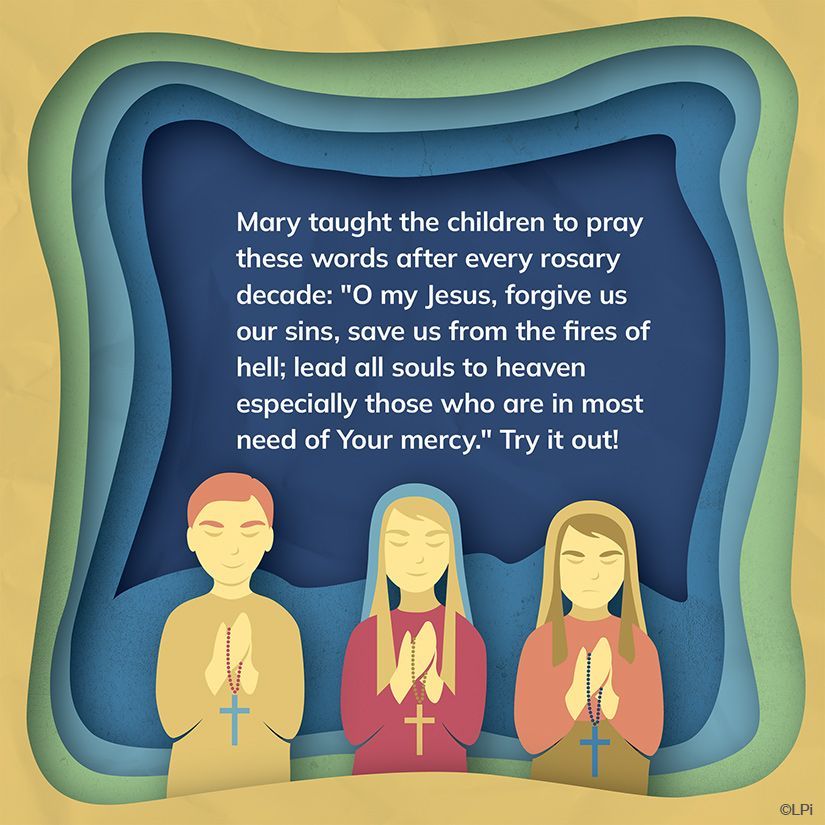
On July 13, 1917, a crowd of about 5,000 accompanied the children. They prayed the rosary, and the lady appeared as before. This time she gave the children a horrifying vision of hell and then spoke about the need for prayer and sacrifice to end World War I. She also warned that a worse war would come if her message was not heeded. She said, “To prevent this, I shall come to ask for the consecration of Russia to my Immaculate Heart, and the Communion of Reparation on the First Saturdays. If my requests are heeded, Russia will be converted and there will be peace; if not, she will spread her errors throughout the world, causing wars and persecutions of the Church.” Then she asked them to add this prayer to each decade of the rosary: “O my Jesus, forgive us our sins, save us from the fires of hell. Lead all souls to Heaven, especially those who are most in need of Thy mercy.”
On August 13, 1917, as many as 20,000 people had gathered, but on that same day the children were arrested, detained in prison for a few days, and interrogated about their visions. The crowd, however, did see a phenomenon in the sky. On August 19, after the children were released, the lady appeared to them once again in the field.
On September 13, 1917, with a crowd of 30,000, the lady appeared and asked the children to continue to pray the rosary. She promised that if they did, the war would end. She then promised “In October, I will perform a miracle so that all may believe.”
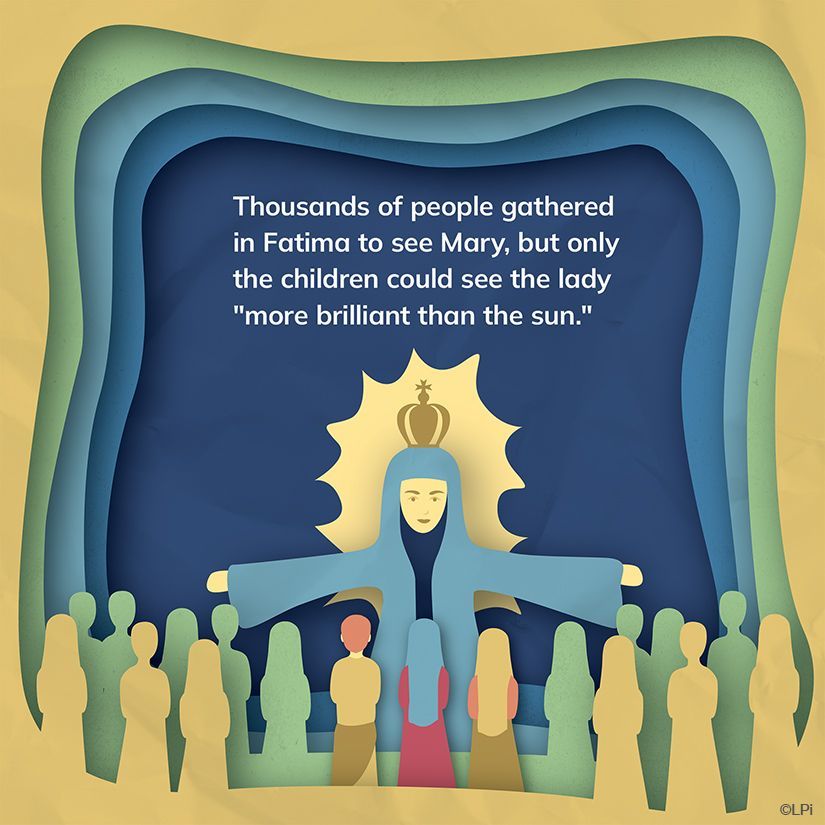
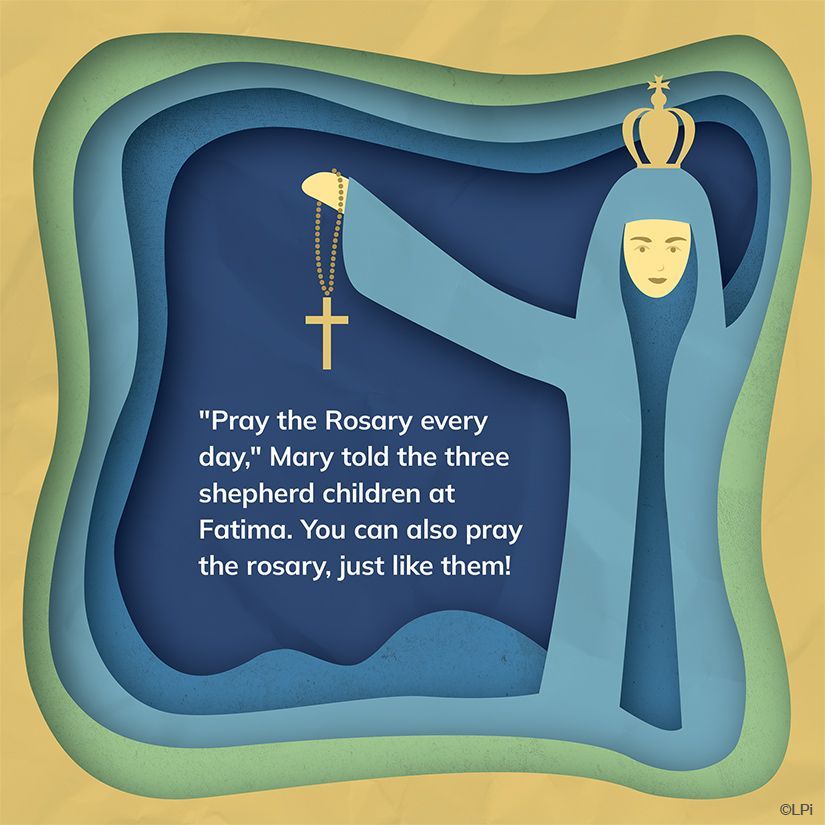
On October 13, 1917, about 70,000 people gathered in the pouring rain. This time the lady revealed her name, saying, “I am the Lady of the Rosary.” She asked for a church to be built on that spot and promised that the war would soon end if they kept praying the rosary every day. When she left the children, everyone in the crowd saw the promised miracle. The sky opened, and those gathered were able to look directly at the sun as it glowed and danced. The sun then plummeted to earth, causing panic, but returned to the sky. Suddenly, everything—including the ground and everyone’s clothing—was completely dry.
Within a few years, Francesco and Jacinta died and went to Heaven as promised by the Lady of the Rosary. Lúcia entered religious life and received an apparition in 1925 during which Our Lady fulfilled her promise that she would return to ask for “the Communion of Reparation on the First Saturdays.” In 1929, Our Lady appeared to Lúcia again, stating, “The moment has come in which God asks the Holy Father to make, in union with all the bishops of the world, the consecration of Russia to My Immaculate Heart.”
Above all, the messages of Fátima reveal the ongoing need to make reparation for the sins and sacrileges committed against the Sacred and Immaculate Hearts of Jesus and Mary, and to pray for the conversion of poor sinners. Daily sacrifice and penance, offered with prayer and profound faith, do more good than we could ever imagine. As we honor these most glorious apparitions today, reflect upon your own willingness to make reparation for the sins of the world through your daily sacrifices. “Make of everything you can a sacrifice and offer it to God…” Doing so will not only appease the Justice of God, it will also bring about the salvation of many souls.
Prayer:
Our Lady of the Rosary, you are the Immaculate Conception, the Queen of Heaven and Earth, and the Mother of God. Please pray for me, that I will heed the messages that you revealed at Fátima. Pray that I will live a life of continuous sacrifice of prayer, so as to make reparation for the sins and sacrileges committed against your most Immaculate Heart and the Sacred Heart of your divine Son. Our Lady of the Rosary, pray for me. Jesus, I trust in You.
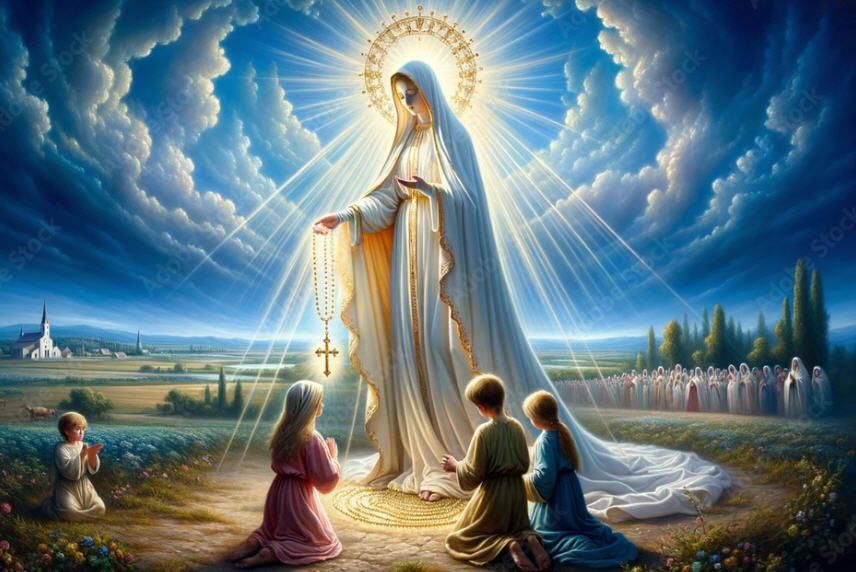
Saints Nereus and Achilleus - May 12
Quote:
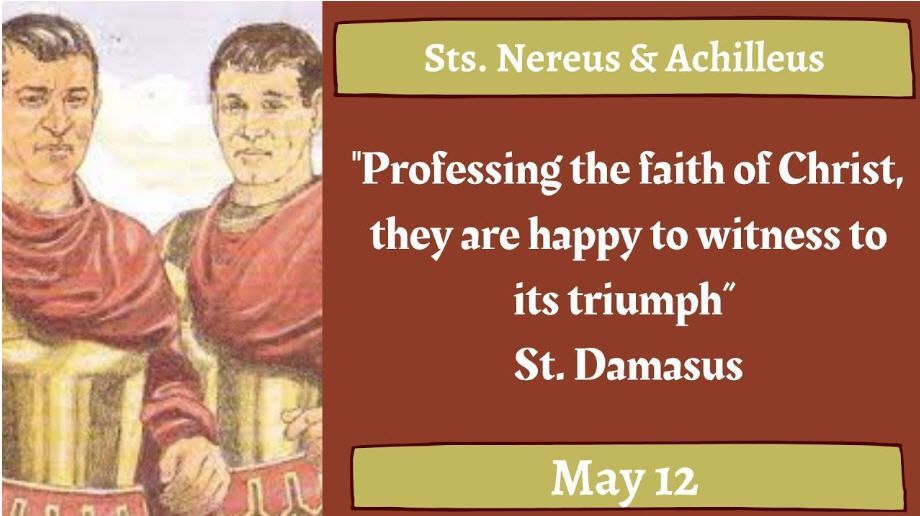
Nereus and Achilleus the martyrs joined the army and carried out the cruel orders of the tyrant, obeying his will continually out of fear. Then came a miracle of faith. They suddenly gave up their savagery, they were converted, they fled the camp of their evil leader, throwing away their shields, armor, and bloody spears. Professing the faith of Christ, they are happy to witness to its triumph. From these words of Damasus understand what great deeds can be brought about by Christ’s glory. ~Pope Saint Damasus
Reflection:
Not long after Jesus’ death and resurrection, Saint Stephen, a deacon of the Church in Jerusalem, became the first Christian martyr. Then came James, the son of Zebedee; James the brother of the Lord; Saints Peter and Paul; and other apostles. Before the turn of the first century, dozens would follow. It is believed that today’s martyrs were among these first witnesses to the faith who shed their blood for Christ.
Very little is known for certain about Saints Nereus and Achilleus. Today theirs are among the 140 statues of saints towering over Saint Peter’s Square, Rome. In 1874, when the Catacomb of Domitilla was discovered and excavated, a fourth-century basilica dedicated to Saints Nereus and Achilleus was found. In that basilica was discovered a well-preserved pillar with the name Achilleus on it, images depicting the men’s decapitation, and the above inscription from Pope Saint Damasus (c. 304–384). In the sixth century, the relics of these saints were moved to another Roman church built in their honor in which they lie today.
Though details are uncertain, Saints Nereus and Achilleus might have been soldiers in the army of the Roman Emperor Domitian. They might have been brothers who were eunuchs responsible for the protection of Emperor Domitian’s niece, Domitilla. Domitilla and Clemens, to whom she was betrothed, were arrested by the emperor for “sacrilege or godlessness,” because they rejected the Roman gods and converted to Christianity. Clemens was put to death and Domitilla was exiled. Her guards, Nereus and Achilleus, also converted and fled their post, and might have even been responsible for converting Domitilla and Clemens. The brothers were arrested and sent into exile. Emperor Domitian died in 96 and was succeeded briefly by Emperor Nerva and then by Emperor Trajan in 98, who is believed to have ordered the beheading of the brothers while they were in exile. Their bodies were later buried in the family catacomb of Domitilla, one of the earliest Christian cemeteries in existence. One tradition states that Saint Peter himself baptized the brothers in Rome.
On May 12, 592, Pope Saint Gregory the Great celebrated Mass at the tomb of these martyrs and said in his sermon, “These saints before whose tomb we are assembled, despised the world and trampled it under their feet, when peace, plenty, riches, and health gave it charms. And this world, which was still so flourishing in itself, was already withered in their hearts.”
Regardless of the lack of certainty regarding the historical details of the lives of these saints, it is certain that they were greatly honored in the early Church. Their witness inspired Christians of their time and for centuries to follow. They are among the earliest witnesses to Christ; and, with the blood they shed, undoubtedly planted the seeds of faith in the hearts of many. Today, their influence is hard to estimate; but in Heaven, the veil will be lifted, and we will be in awe of the effect that their sacrifice had not only on the early Church but also on the Church throughout the ages.
As we ponder these great saints today, reflect upon the important fact that the seeds you plant in the hearts of others is not only for them, it is also for everyone that they will touch with God’s grace. The seeds we plant do grow, and though we might not always be able to point to the fruit that is borne, we can be certain that God will reveal this to us with great joy in the glories of Heaven.
Prayer: Saints Nereus and Achilleus, you chose exile and death rather than serve an evil tyrant by denying the Gospel of Jesus Christ. Your courage and martyrdom inspired many in the early Church, and the seeds of faith that God sowed through your blood have grown throughout the centuries, producing an army of soldiers for the Kingdom of God. Please pray for me, that I will never cower in the face of persecution, but will accept all for the glory and honor of Christ. Saints Nereus and Achilleus, pray for me. Jesus, I trust in You.
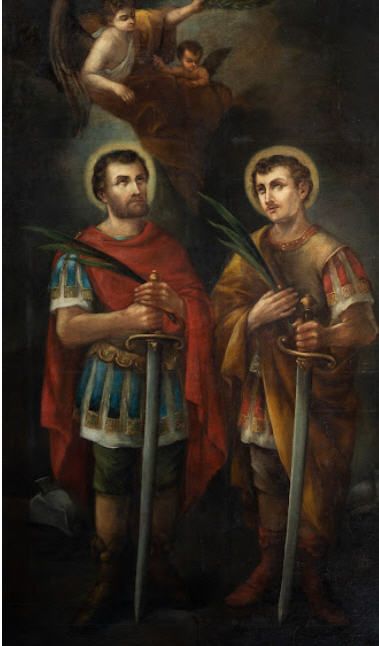
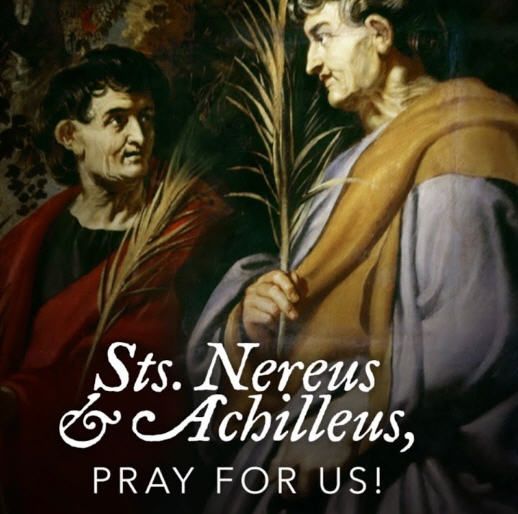
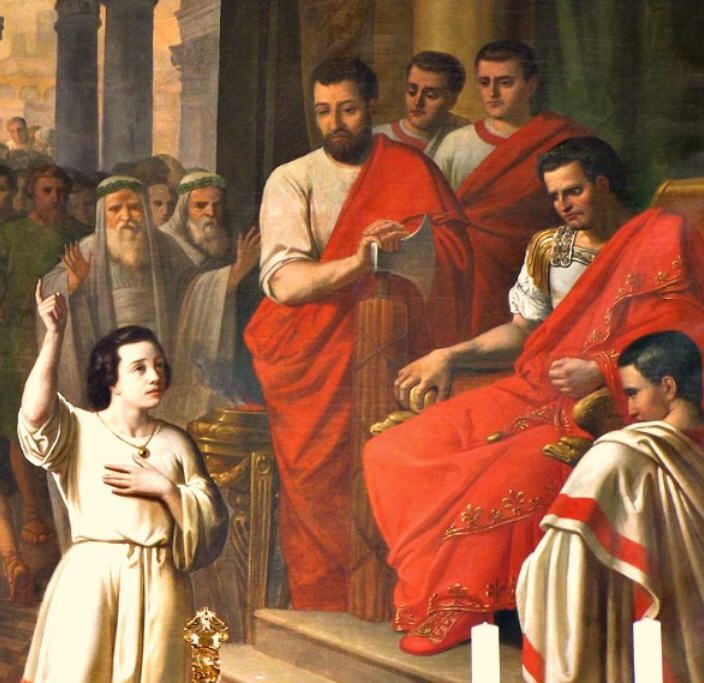
Saint Ignatius of Laconi - May 11
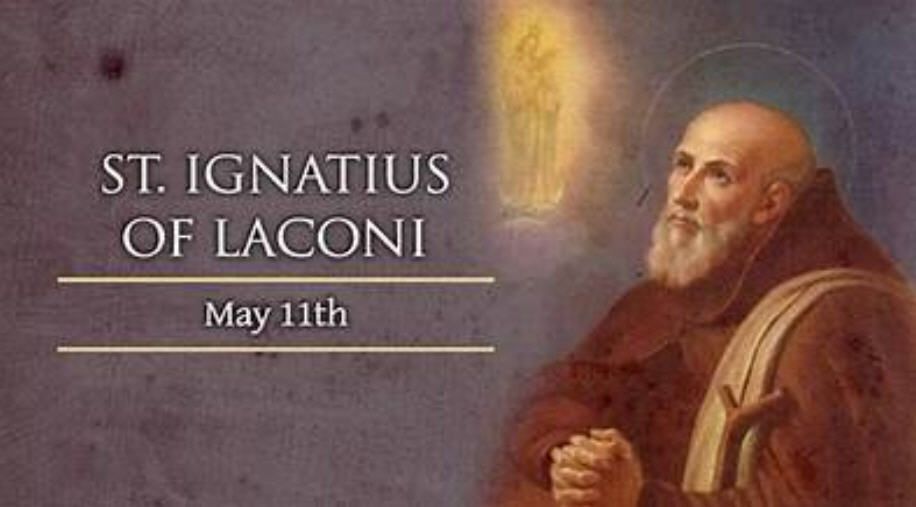
Quote:
“Charity is the richest alms we can give.” — St. Ignatius of Laconi
Reflection:
St. Ignatius of Laconi was born in 1701 on the island of Sardinia, Italy. From a young age, he was known for his deep piety and desire to serve God. After recovering from a serious illness, he fulfilled a promise to God by joining the Capuchin Franciscans. Ignatius spent his life performing humble tasks, particularly serving as the official beggar for his friary. As a porter and questor, he traveled the streets daily, asking for alms, but offering spiritual counsel, prayers, and kindness to everyone he met. Despite being poor and often facing insults, he treated all with patience and charity. He became widely known for his holiness, miracles, and the conversions he inspired. St. Ignatius died in 1781 and was canonized in 1951, recognized for his humble, faithful witness to Christ in everyday life.
Practical Lessons
- Serve with Joy, No Matter the Task: St. Ignatius shows us that even small, unnoticed jobs can become powerful acts of love. Approach your daily tasks—whether cleaning, errands, or paperwork—with patience and joy, seeing them as ways to serve others and honor God.
- Kindness Overcomes Criticism: Ignatius often faced insults while begging but always responded with gentleness. When dealing with rude customers, difficult coworkers, or social tensions, choose kindness and patience instead of anger or resentment.
- Use Daily Encounters for Evangelization: Without preaching grand sermons, Ignatius evangelized simply by how he lived and treated others. Today, we can reflect Christ to others through small conversations, a helping hand, or offering to pray for someone who is struggling.
Prayer
St. Ignatius of Laconi, humble servant of God, pray for us. Teach us to find joy in small tasks, to respond with kindness when we are tested, and to recognize every moment as an opportunity to share Christ’s love. Help us to walk with patience and humility, trusting that even our hidden efforts can glorify God. Amen.